A risk-based internal audit programme starts with what can go wrong.
How to plan an ISO 9001 clause 9.2 internal audit programme that is genuinely risk-based, using an audit universe, priorities and the guidance in ISO 19011.
The principle
Auditing every process with the same frequency is easy to schedule and hard to defend.
Many internal audit programmes are a calendar: every process once a year, in the same order as last year. It satisfies the letter of the standard, but it spends audit time evenly on areas that carry very different levels of risk.
A risk-based programme does something more useful. It concentrates audit effort where problems are most likely and most costly, while still making sure every part of the management system is covered over the certification cycle. It also gives the audit function a clear, defensible answer when someone asks why a particular area was audited, or why it was not.
01 · Start with context
What clause 9.2 expects from a programme.
ISO 9001 clause 9.2 asks for internal audits at planned intervals, to provide information on whether the quality management system conforms to the organisation’s own requirements and the standard, and whether it is effectively implemented and maintained.
The audit programme must take into consideration the importance of the processes concerned, changes affecting the organisation, and the results of previous audits. Each audit needs defined criteria and scope, auditors selected to ensure objectivity and impartiality, results reported to relevant management, and timely correction and corrective action.
ISO 19011, Guidelines for auditing management systems, adds practical guidance on managing an audit programme: objectives, risks and opportunities to the programme itself, resources, and how to monitor, review and improve it.
02 · Build the audit universe
List everything that could be audited.
The audit universe is the complete set of auditable areas: processes, departments, sites, functions and key suppliers. It is the starting point for every planning decision.
- Core processes such as sales, design, production and delivery.
- Support processes such as purchasing, maintenance, HR and IT.
- Requirements from each standard you certify against.
- Sites and locations with their own operations.
A universe that is maintained over time also shows which areas have not been audited recently.
How granular should it be?
Too broad, and "Operations" becomes a single entry that cannot be audited in a day. Too narrow, and the universe becomes hundreds of entries nobody can rate. A practical level is usually the process or sub-process: purchasing, supplier evaluation, receiving inspection, rather than either "supply chain" or every individual form. The universe should map cleanly to the processes defined under clause 4.4.
03 · Rate the risk
Decide where audit time matters most.
Each area in the universe can be rated on a few factors, scored consistently.
- Impact: how much would a failure here affect customers, compliance or safety?
- Change: has the process, system, team or regulation changed recently?
- History: what did previous audits, nonconformities and complaints show?
- Maturity: how established and stable is the process?
High-risk areas are audited more often and in more depth. Stable, low-risk areas can move to longer intervals, as long as every area is still covered over the certification cycle.
Turning scores into frequency
A simple approach links the combined risk score to an audit frequency: high-risk areas every six months, medium-risk annually, low-risk every eighteen to twenty-four months. The exact thresholds matter less than applying them consistently and recording the reasoning, so the programme can be explained to management and certification auditors alike.
04 · Plan the year
Turn priorities into an annual plan.
The annual plan translates risk ratings into scheduled engagements with dates, scope, criteria and an assigned audit team. Auditor objectivity matters here: nobody should audit their own work.
A good plan leaves room for change. A major complaint, a new regulation or a reorganisation may justify an additional audit, and the programme should show why the plan changed.
Planning also needs to consider resources honestly. A programme that schedules more audit days than the team has available will slip, and slipped audits are a common certification finding. Where internal resources are thin, trained auditors from other departments, or occasional external support, can fill the gap while preserving objectivity.
05 · Monitor the programme
The programme itself needs review.
Clause 9.2 audits the system, but the audit programme also needs oversight. Useful measures include:
- Engagements completed against plan.
- Findings raised and their severity.
- Management actions closed on time.
- Areas not audited within the intended interval.
These results are a natural input to management review and to next year’s risk ratings.
Common pitfalls
- Same plan every year: a calendar copied forward without reconsidering risk, change or previous results.
- Audit by checklist only: auditing clauses in isolation rather than following processes end to end.
- Auditors auditing their own area: a direct conflict with the objectivity requirement.
- No follow-through: findings issued but not tracked, so the next audit finds the same issues.
06 · Certora internal audit
From audit universe to approved report.
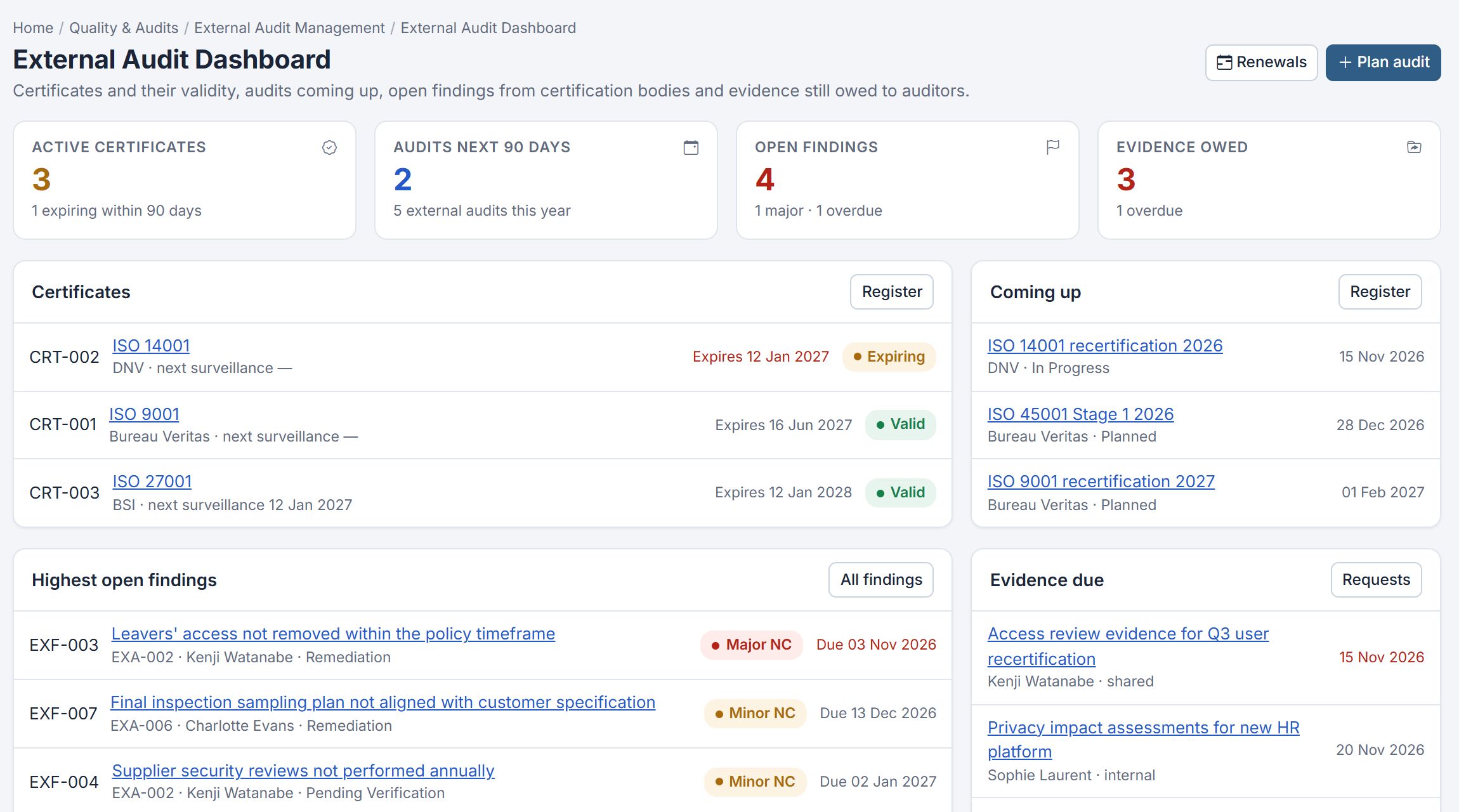
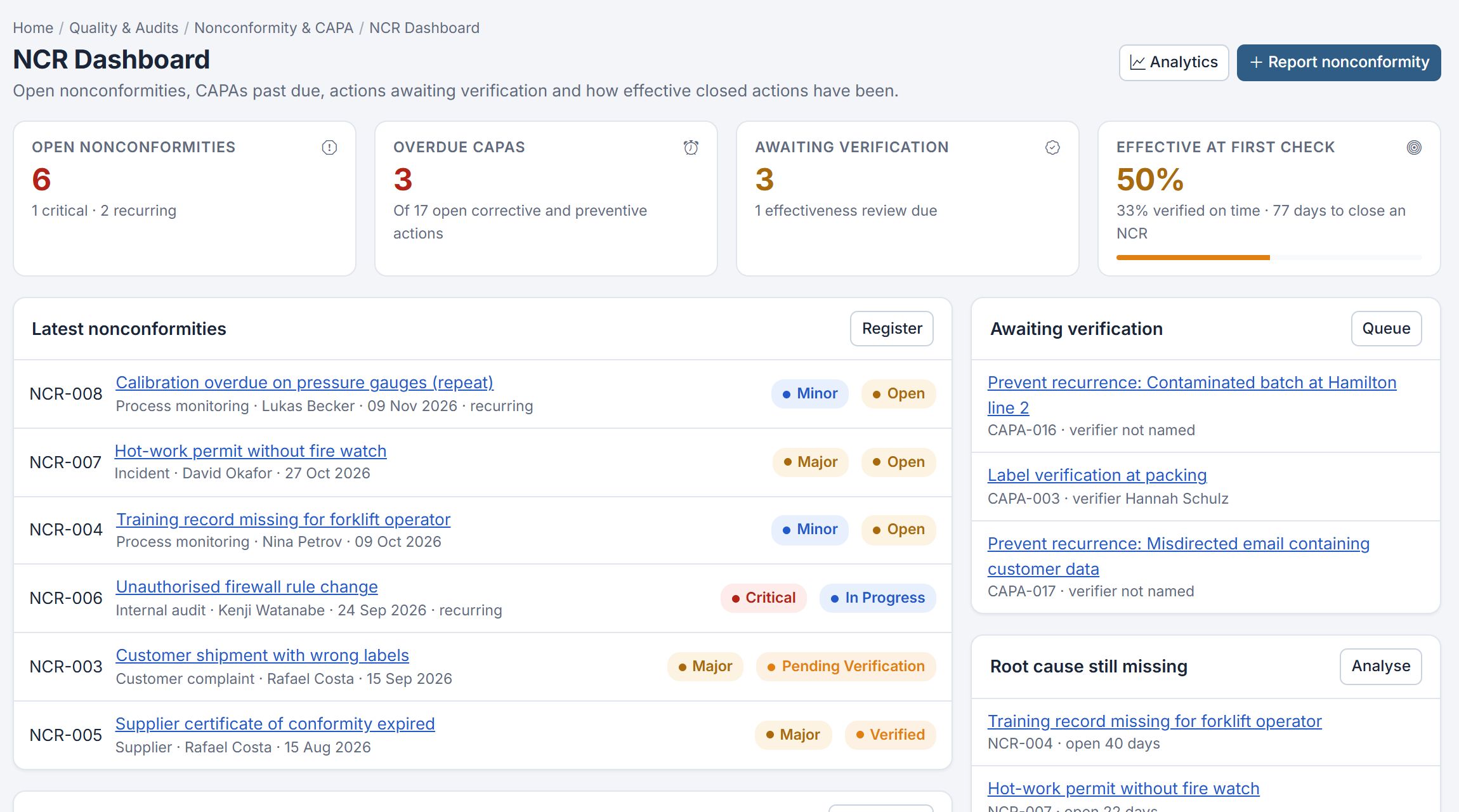
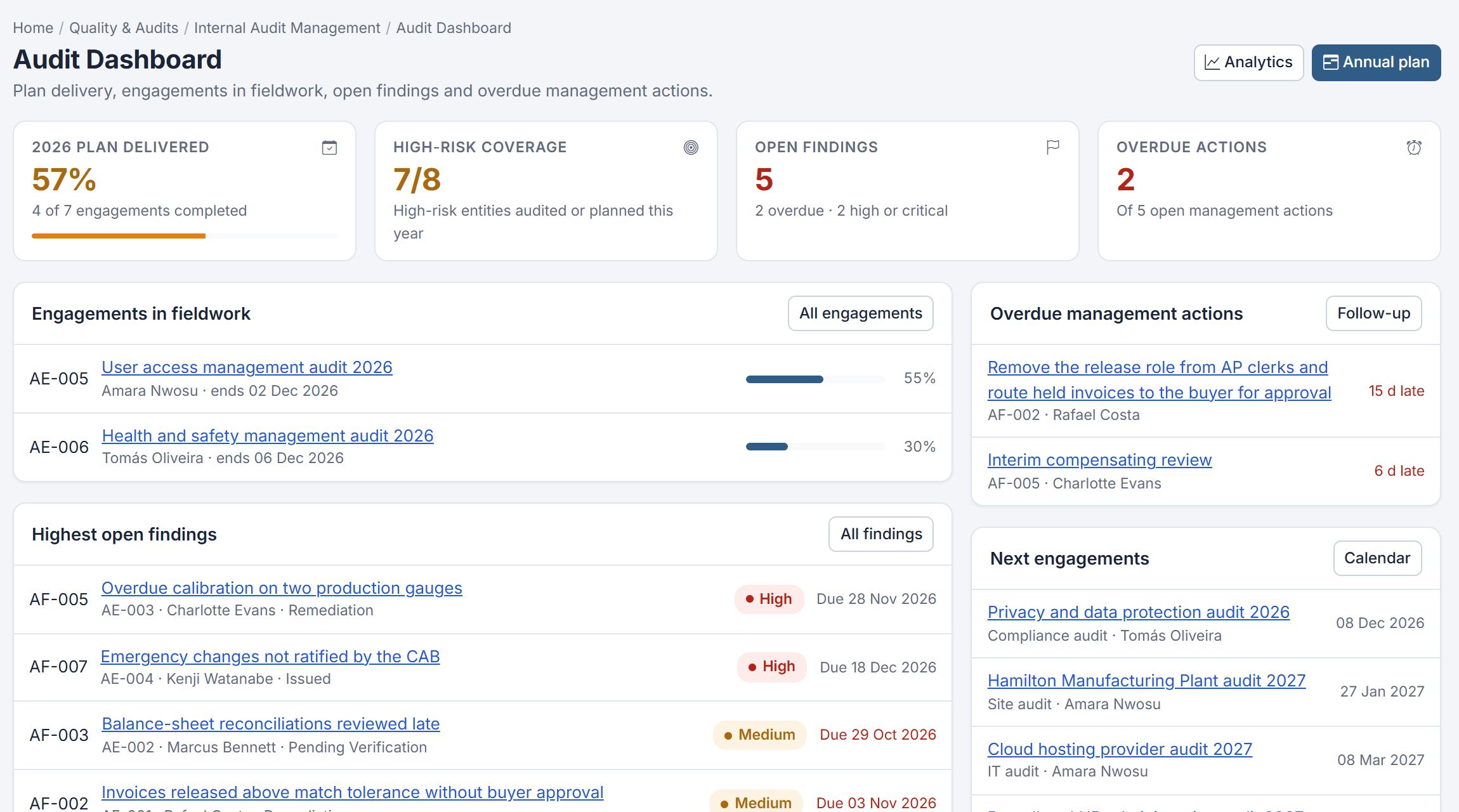
Certora Internal Audit Management plans risk-based audits across the audit universe and turns them into an annual audit plan of engagements. Each engagement runs with audit programs, workpapers and tests, findings are issued and tracked, and the audit report is built and approved in the system.
The audit calendar shows fieldwork alongside finding and action due dates, and audit analytics report progress against the plan. Management responses and follow-up are tracked through to validation.
Read from audit finding to verified closure for how findings are followed up, or see how audits feed management review.