An audit finding is only as good as its follow-up.
How to write clear internal audit findings, agree management responses and follow actions through to validated closure, in line with ISO 9001 and ISO 19011.
The principle
The audit report is the midpoint of the audit, not the end of it.
Internal audits often produce good findings and weak outcomes. The report is issued, responses are promised, and months later the same issues reappear in the next audit. The gap is not in the audit itself. It is in what happens after.
Follow-up is where an internal audit function earns its credibility with management. A function that raises findings but never sees them resolved is easy to ignore. One that tracks every agreed action to a validated close, and reports openly on what is overdue, becomes a genuine driver of improvement.
01 · Start with context
What makes a finding usable.
A finding has to give management something specific to act on. ISO 19011 describes audit findings as the result of evaluating collected audit evidence against audit criteria. In practice, a usable finding has four parts.
- Criteria: the requirement, such as an ISO clause, procedure or contract term.
- Condition: what was actually observed, with evidence.
- Cause: why the gap exists, as far as the auditor can tell.
- Effect: why it matters, in terms of risk to quality, compliance or customers.
Findings written this way are harder to dispute and easier to fix.
Before and after
Compare two versions of the same finding. Weak: "Supplier evaluation is not being done properly." Strong: "Procedure PRO-012 requires annual re-evaluation of critical suppliers (criteria). Three of the eight critical suppliers sampled had not been re-evaluated in over eighteen months (condition). Re-evaluation dates are not tracked anywhere visible to purchasing (cause). Deteriorating supplier performance may go undetected, affecting product conformity (effect)." The second version tells management exactly what to fix and why.
02 · Grade the severity
Not every finding deserves the same urgency.
Classifying findings helps management prioritise. Many organisations use a simple scale, for example major, minor and observation, or a rating from high to low.
The grading should reflect the impact and the extent of the problem, not the auditor’s frustration. A consistent scale also makes trends visible across audits and years.
Defining each level in writing helps. A major finding might be a systemic failure or one that directly affects product conformity, safety or legal compliance. A minor finding might be an isolated lapse with limited impact. An observation might be a potential weakness or an opportunity for improvement. With shared definitions, two auditors looking at the same evidence should reach the same grade.
03 · Agree the response
Ownership comes from the auditee.
Each finding needs a management response: the action the auditee will take, who owns it and by when. The auditor’s role is to judge whether the response would address the cause, not to write the action plan.
- The finding is shared with the responsible manager.
- The manager proposes an action, an owner and a due date.
- The auditor accepts the response or asks for a stronger one.
- The agreed action is tracked from that point on.
Responses agreed before the report is approved avoid surprises later.
When management disagrees
Occasionally a manager will dispute a finding or decline to act. That is legitimate if they are accepting a risk with the authority to do so. The disagreement and the decision should be recorded, and significant accepted risks reported upward, so the decision is visible rather than quietly ignored.
04 · Track to closure
Follow-up is part of the audit programme.
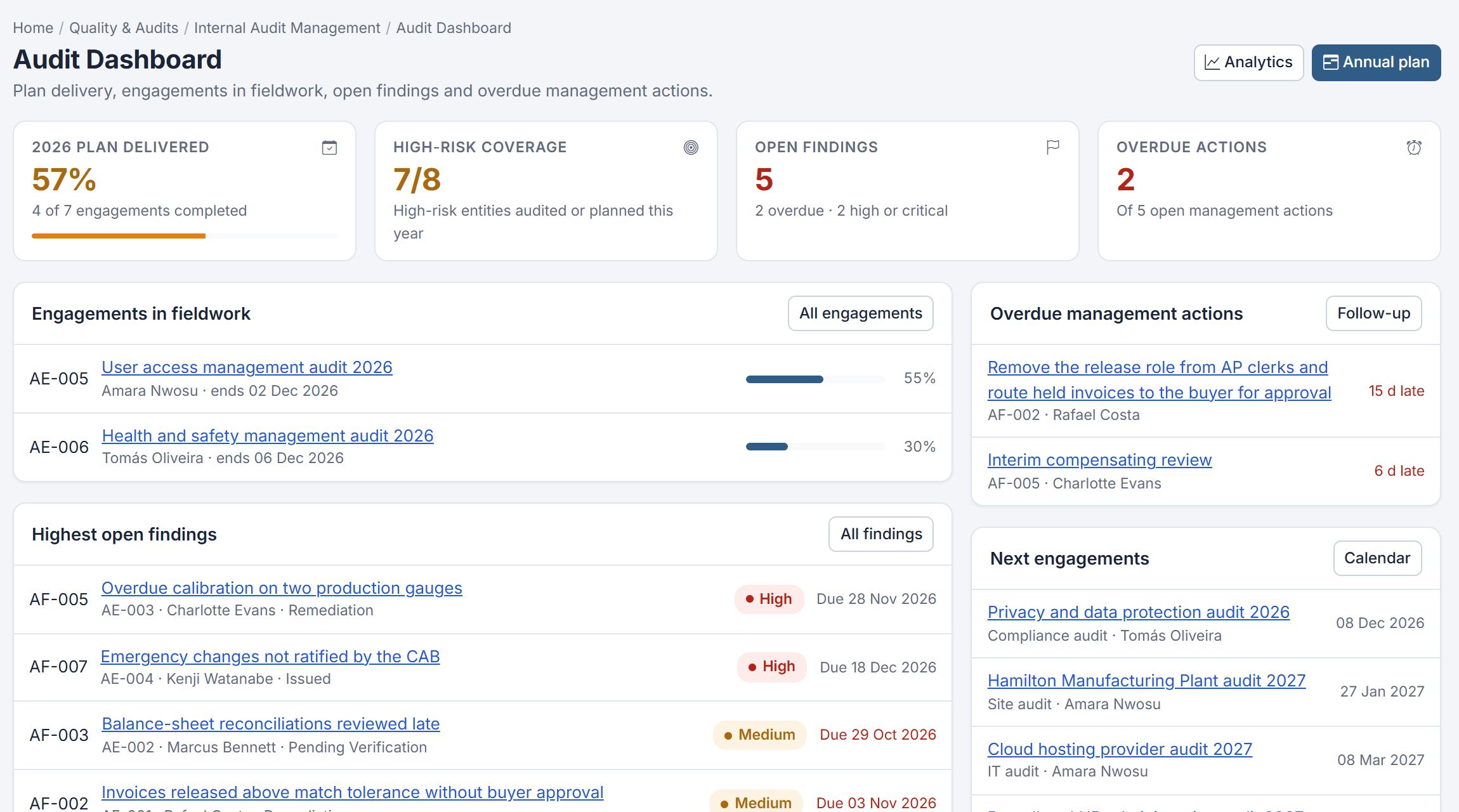
Open actions should be visible in one place, with due dates, owners and status, so overdue items surface before the next audit rather than during it.
- Remind owners ahead of due dates.
- Escalate actions that slip past their due date.
- Report open and overdue actions to management.
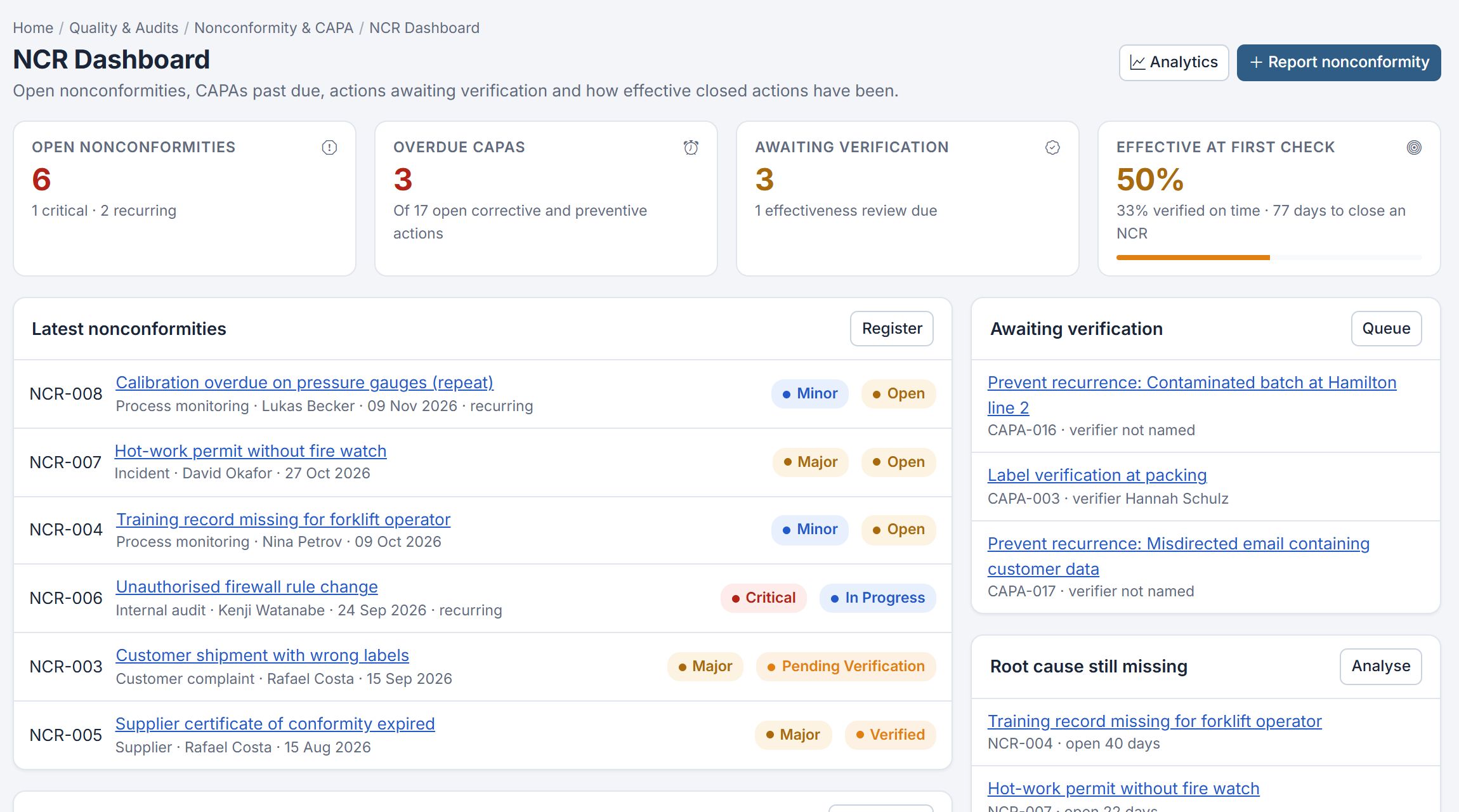
Where a finding reveals a nonconformity, the follow-up should connect to the corrective action process so root cause and effectiveness are handled consistently.
Due date extensions deserve control. A reasonable request, with a reason and a new date, should be approved and recorded. Repeated extensions on the same action are a signal worth reporting, because they often indicate that the action was never really resourced.
05 · Validate the fix
Closure is the auditor's decision.
When the owner reports an action complete, the auditor reviews the evidence and validates whether the finding is resolved. For significant findings, a follow-up visit or a targeted re-test may be appropriate.
Validated closure gives management confidence that "closed" means fixed, and it gives the next audit a clean baseline.
Common pitfalls
- Vague findings: observations without criteria or evidence, which invite debate instead of action.
- Auditor-written actions: actions imposed by the auditor, which the auditee does not own and rarely delivers.
- Self-closed actions: owners closing their own actions without anyone checking the evidence.
- Invisible overdue items: no regular reporting, so management only learns of slipped actions at the next audit.
06 · Certora internal audit
Findings, responses and validated closure.
Certora Internal Audit Management issues findings from each engagement and builds the audit report for approval in the system. Management responses and follow-up are tracked in a dedicated tracker, where actions move through to validation by the audit team.
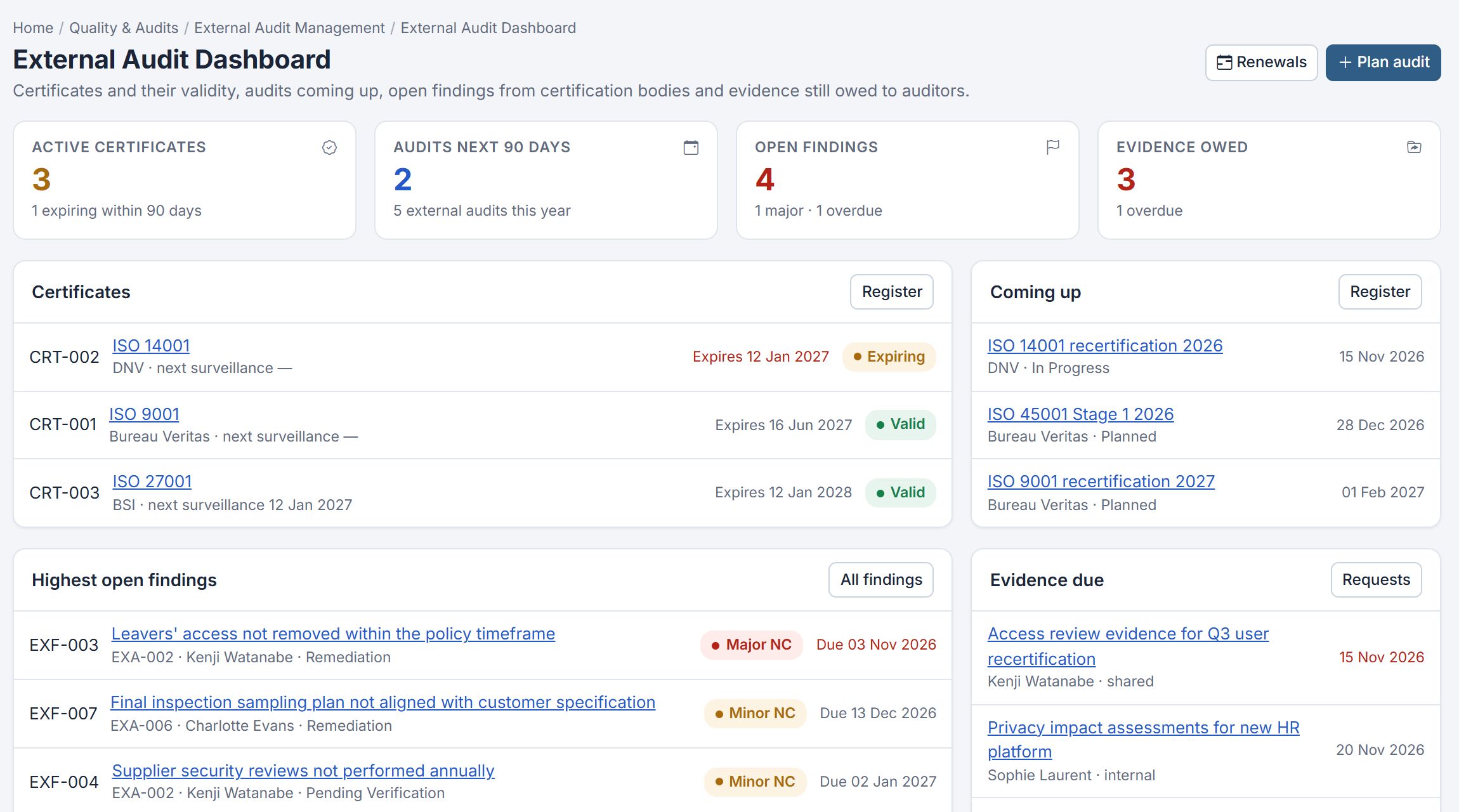
Finding and action due dates appear on the audit calendar alongside fieldwork, audit analytics show progress and overdue items, and findings can connect to Nonconformity & CAPA for root cause and effectiveness review.
See planning a risk-based internal audit programme for how engagements are scheduled, or CAPA and root cause analysis for findings that become corrective actions.