Third-party risk lasts the whole relationship, including the end of it.
How to manage third-party risk across the supplier lifecycle: onboarding, contracts and SLAs, performance, reassessment and safe offboarding with data returned.
The principle
The riskiest moments with a supplier are often the first day and the last.
Third-party risk management is often reduced to a questionnaire at onboarding. Yet suppliers change over the life of a contract, and the end of the relationship, when access and data must be recovered, is where many organisations are least prepared.
As organisations rely more on outsourced services, cloud providers and specialist contractors, their risk boundary extends well beyond their own walls. A supplier’s data breach, financial collapse or quality failure can become your incident, your customer complaint or your regulatory problem. Managing that risk means managing the whole relationship, not just the first day.
01 · Start with context
Third parties extend your risk boundary.
Suppliers, contractors and service providers can affect quality, information security, continuity and compliance. ISO 9001 clause 8.4 covers externally provided processes, products and services. ISO/IEC 27001 includes controls for information security in supplier relationships and in the ICT supply chain. ISO 22301 expects the continuity of critical suppliers to be considered in business impact analysis and continuity planning.
A lifecycle view brings these requirements together, so the same supplier is not assessed separately by quality, security and continuity teams with different questionnaires.
02 · Onboard with care
Due diligence before commitment.
- Classify the third party by criticality and the type of access or data involved.
- Carry out due diligence proportionate to that criticality.
- Assess the risks the relationship introduces.
- Approve onboarding with any conditions or required controls.
What due diligence covers
Depending on the relationship, due diligence may include financial stability, quality certifications, information security controls, data protection arrangements, business continuity plans, legal and sanctions checks, and ethical and environmental practices. A tiered approach applies a light check to low-risk suppliers and a full review, possibly including an on-site visit, to critical ones.
03 · Contract for control
SLAs and obligations in writing.
- Record the contract with key dates, value and renewal terms.
- Define service levels and how they are measured.
- Include security, quality and compliance obligations.
- Assign a relationship owner responsible for the contract.
Clear SLAs make performance scoring objective rather than anecdotal.
Contracts should also anticipate the end of the relationship: notice periods, data return or destruction, transition assistance, and the right to audit. Negotiating these at the start, when both parties are motivated to agree, is much easier than at the end.
04 · Monitor and reassess
Risk changes during the relationship.
Performance should be scored regularly against SLAs. Reassessment should happen on a schedule that reflects criticality, and after events such as an incident, a data breach, financial difficulty or a change of ownership.
Reassessment results may change the supplier’s risk rating, the controls required, or the decision to continue.
Fourth parties
Your suppliers have suppliers. A cloud service provider may rely on another provider for hosting; a logistics partner may subcontract delivery. For critical relationships, due diligence and reassessment should ask about key subcontractors, because a failure two steps down the chain can still reach you.
05 · Offboard safely
End the relationship cleanly.
When a contract ends, a structured offboarding process protects the organisation.
- Revoke system and site access.
- Recover or confirm destruction of data, with evidence.
- Transfer services and knowledge to a replacement where needed.
- Close the contract record with the reason for exit.
Offboarding is frequently overlooked and frequently audited, particularly for information security.
Lingering access is the most common offboarding failure. Accounts created for a supplier’s staff often remain active long after the contract ends, because nobody owned the task of removing them. A checklist with owners for each step, and evidence of completion, closes that gap.
Common pitfalls
- Onboarding-only TPRM: thorough checks at the start, then nothing for the life of the contract.
- Siloed questionnaires: quality, security and procurement each sending suppliers separate assessments.
- Contracts without exit terms: no agreed data return or transition support when the relationship ends.
- Forgotten access: supplier accounts left active after offboarding.
06 · Certora third-party risk management
The full supplier lifecycle.
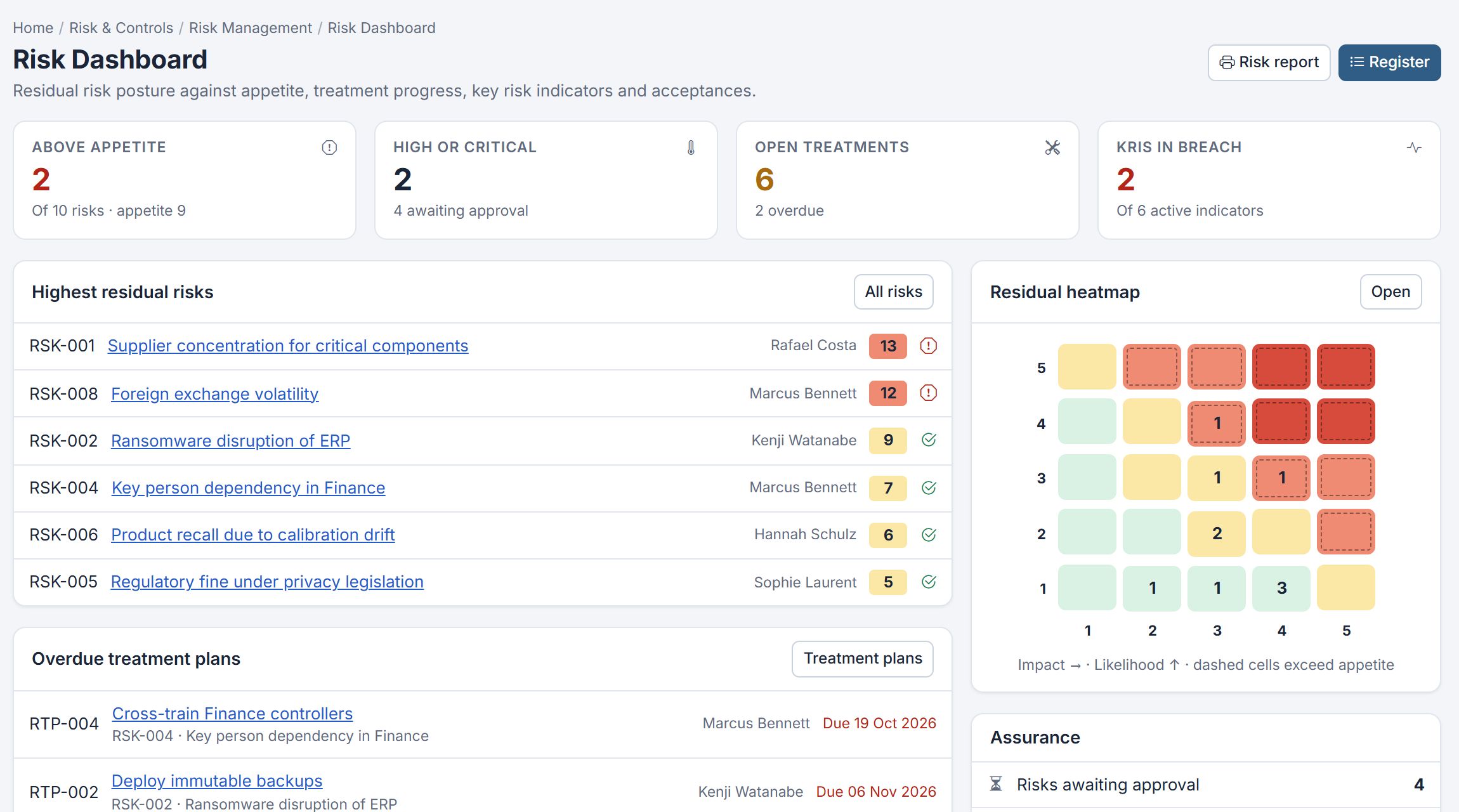
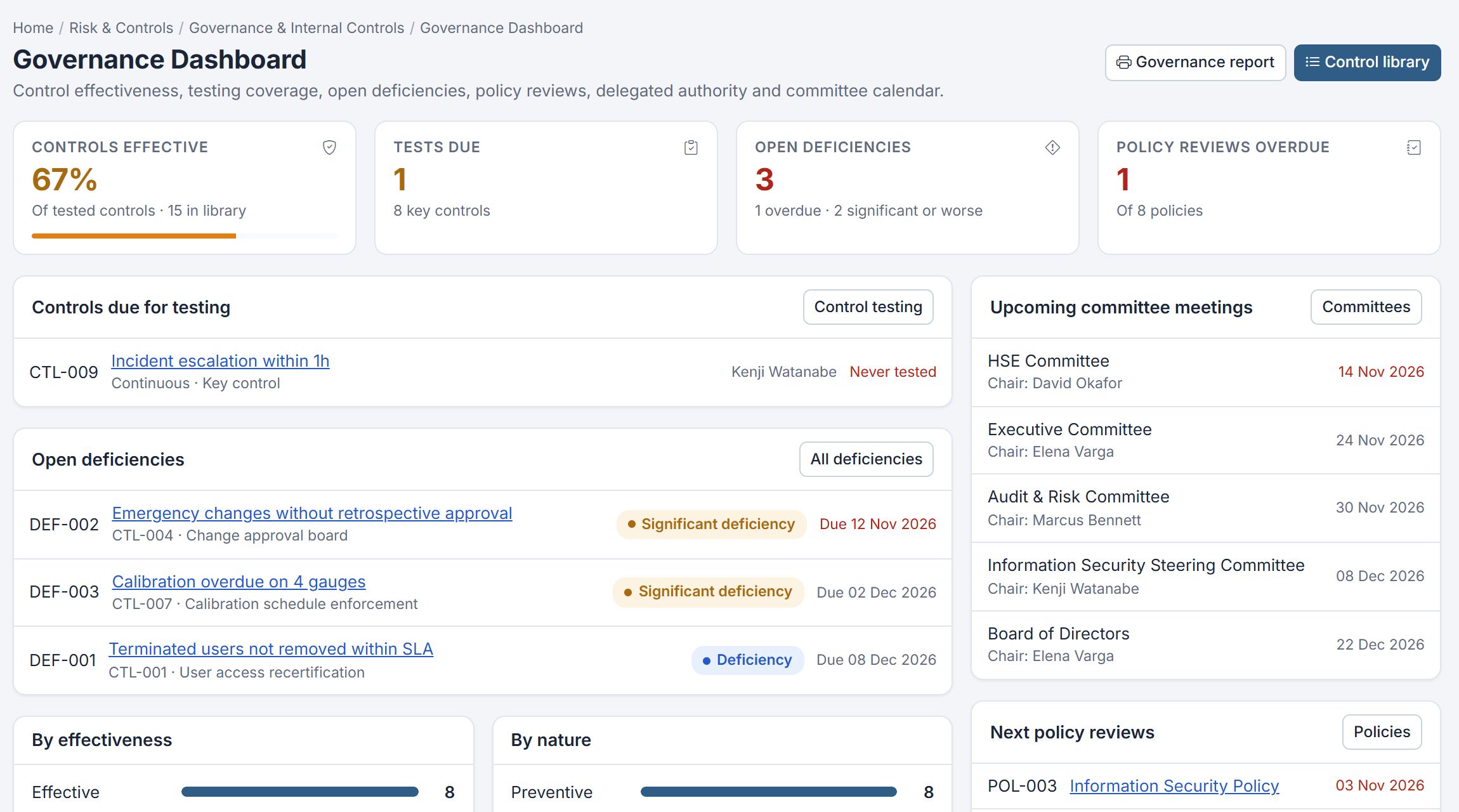
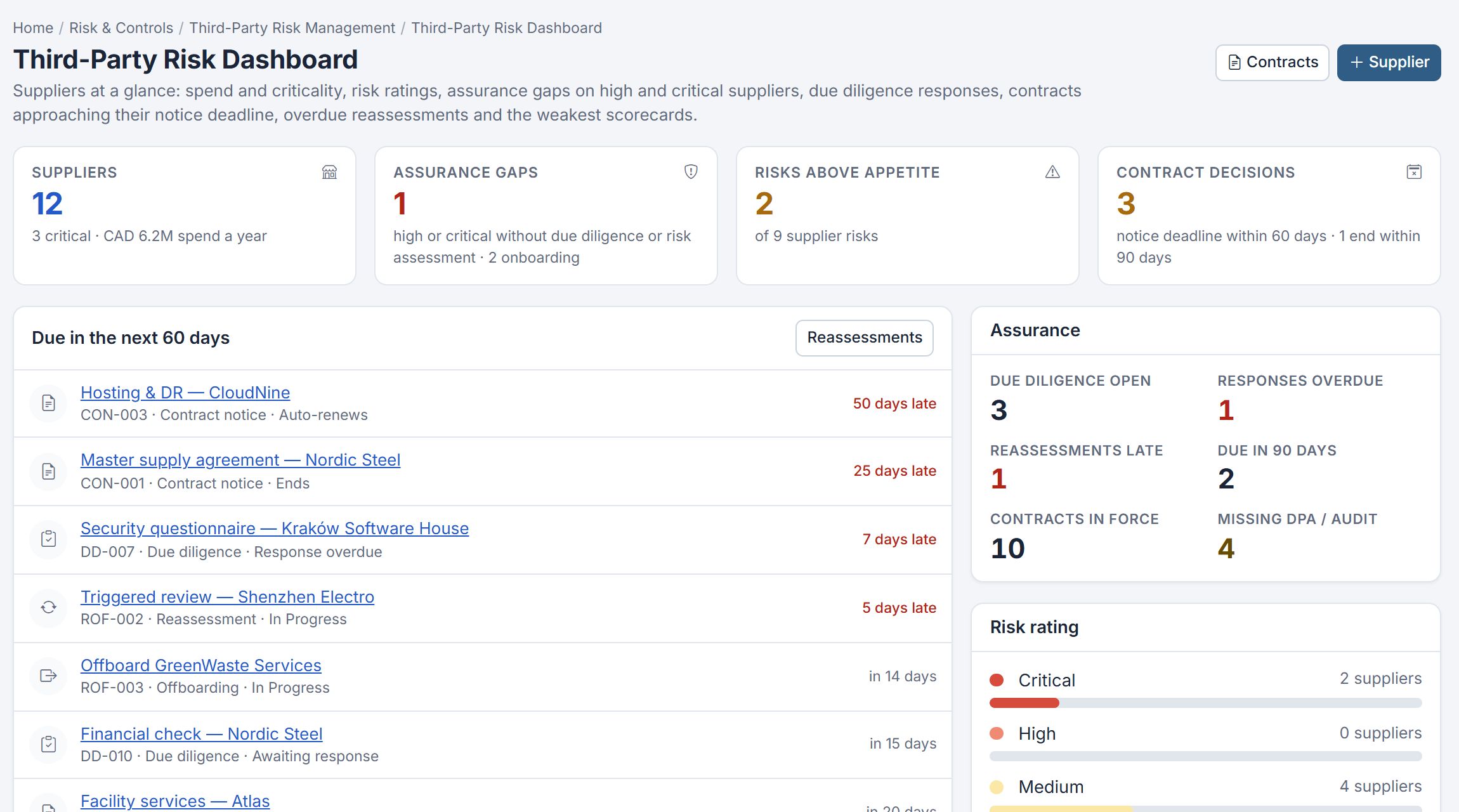
Certora Third-Party Risk Management onboards suppliers with due diligence and risk assessment proportionate to criticality, manages contracts and SLAs, and scores performance. Suppliers are reassessed on schedule or after events, and offboarding is managed with data returned and access revoked.
The third-party risk dashboard shows criticality, reassessments due and contracts approaching renewal. See supplier evaluation under ISO 9001 for how criticality shapes evaluation.