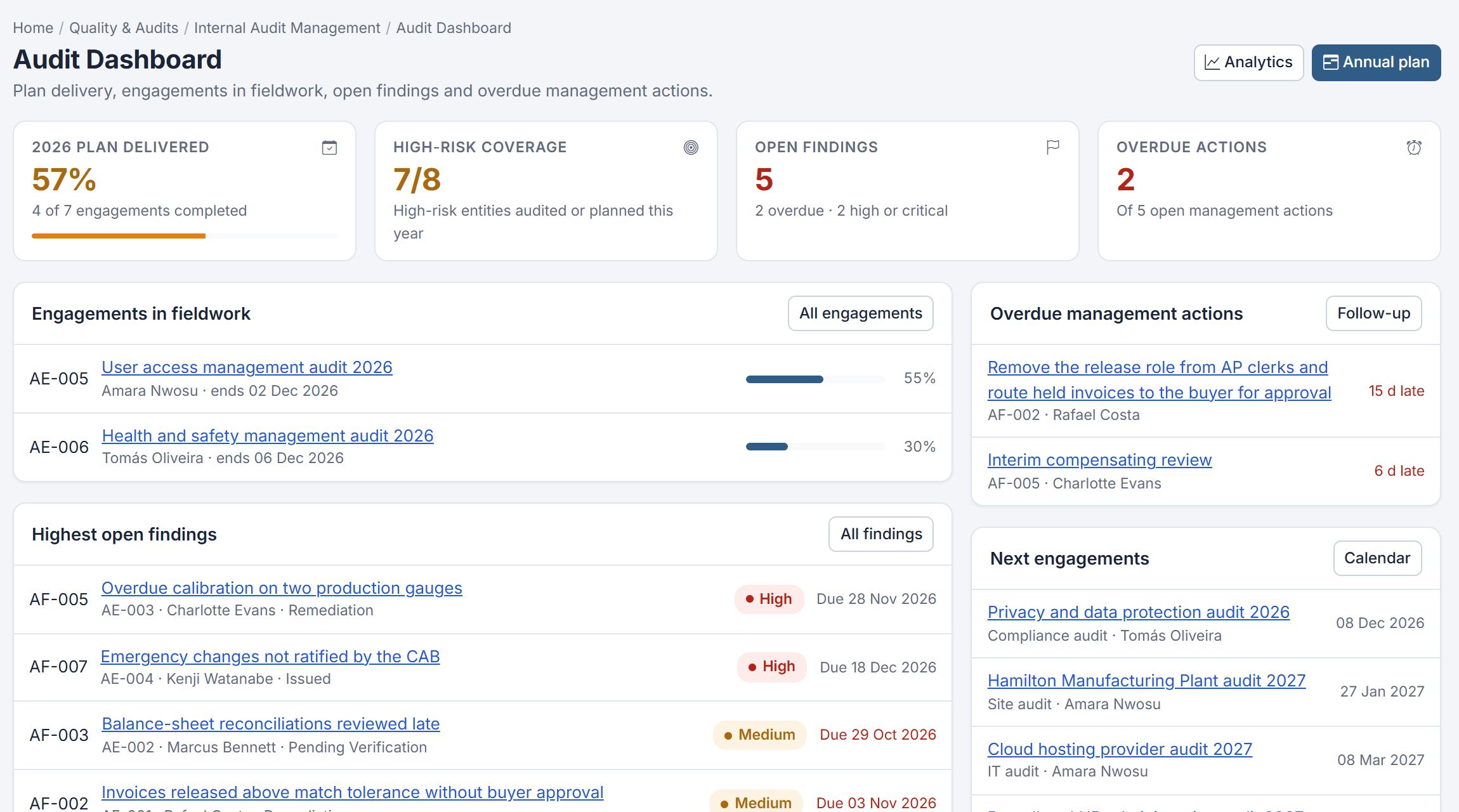
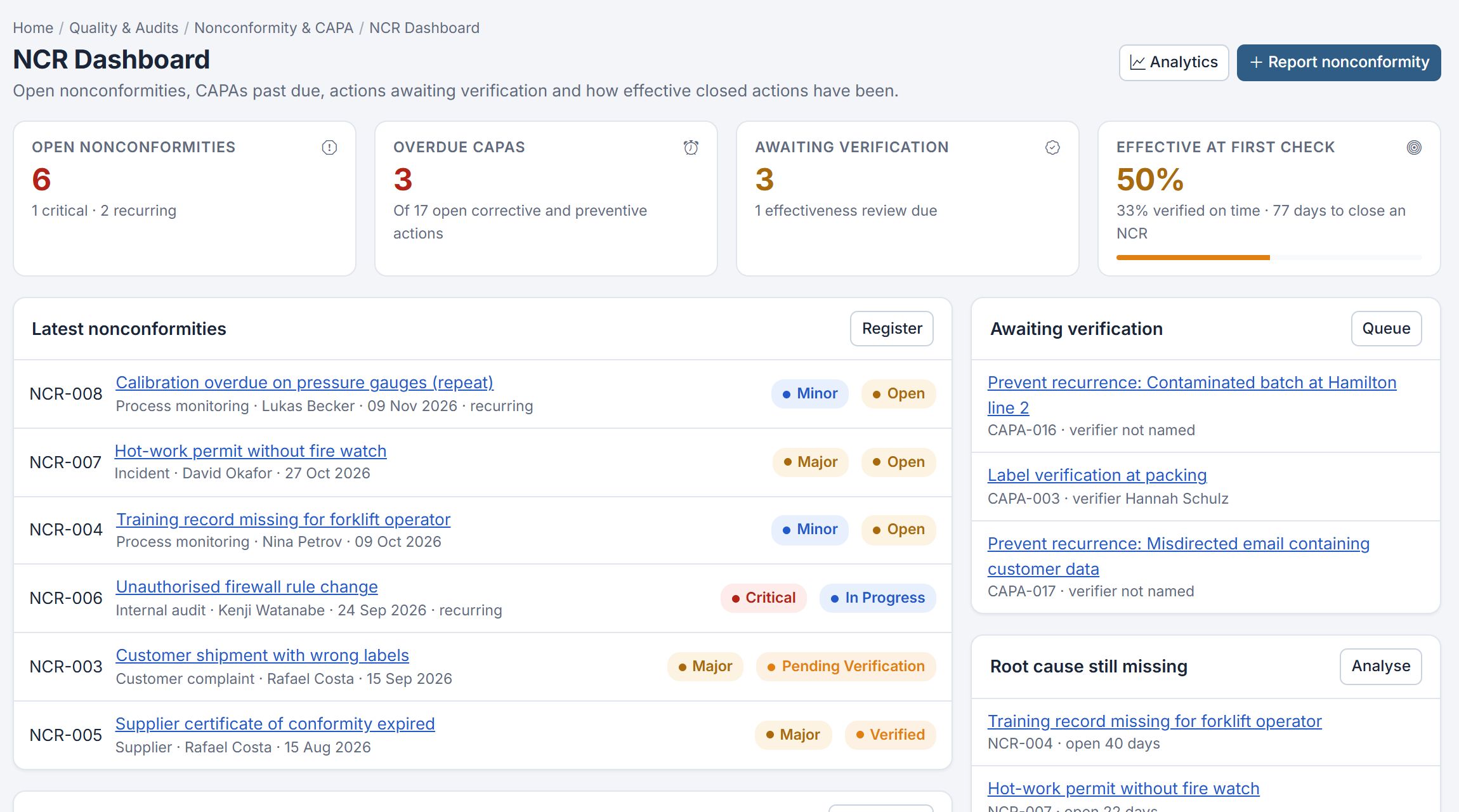
Keeping certificates valid between audits.
How the three-year ISO certification cycle works, what surveillance and recertification audits cover, and how to track certificates and renewal dates.
The principle
A certificate is a three-year commitment, not a one-day achievement.
The day a certificate arrives is often the day attention moves elsewhere. Then the first surveillance audit is announced, and the team discovers that internal audits slipped, management review was postponed and corrective actions from certification are still open.
Certification is not a one-off achievement. It is a three-year commitment, renewed through regular audits, and the organisations that find surveillance routine are those that treat the management system as part of normal operations rather than as an annual project.
01 · Start with context
The three-year certification cycle.
Under ISO/IEC 17021-1, certification runs on a three-year cycle. After initial certification, surveillance audits take place at least once a year, and the first surveillance after initial certification must take place no later than twelve months from the date of the certification decision. A recertification audit, completed before the certificate expires, renews it for another cycle.
Each surveillance audit samples part of the system, while recertification reviews the system as a whole again, including its performance over the whole cycle.
What happens if you miss a date
If a surveillance audit is not carried out in time, or nonconformities are not resolved, the certification body may suspend the certificate. If recertification is not completed before expiry, the certificate lapses and restoring it can require a substantial re-audit. Customers who require certification may notice quickly, particularly where certificates are checked in public registers.
02 · Know what surveillance covers
Some things are checked every time.
Surveillance audits vary in scope, but certain topics come up at almost every visit.
- Internal audits and management review completed since the last visit.
- Progress on findings from the previous audit.
- Customer complaints and how they were handled.
- Changes to the organisation, scope or processes.
- Use of the certification mark and certificate.
Keeping these current throughout the year makes surveillance routine rather than a scramble.
Surveillance also typically samples a rotating selection of processes, so that over the three-year cycle the whole scope is covered. Knowing which processes were sampled last time helps you anticipate which areas are likely to be examined next.
03 · Track every certificate
Multiple standards, multiple dates.
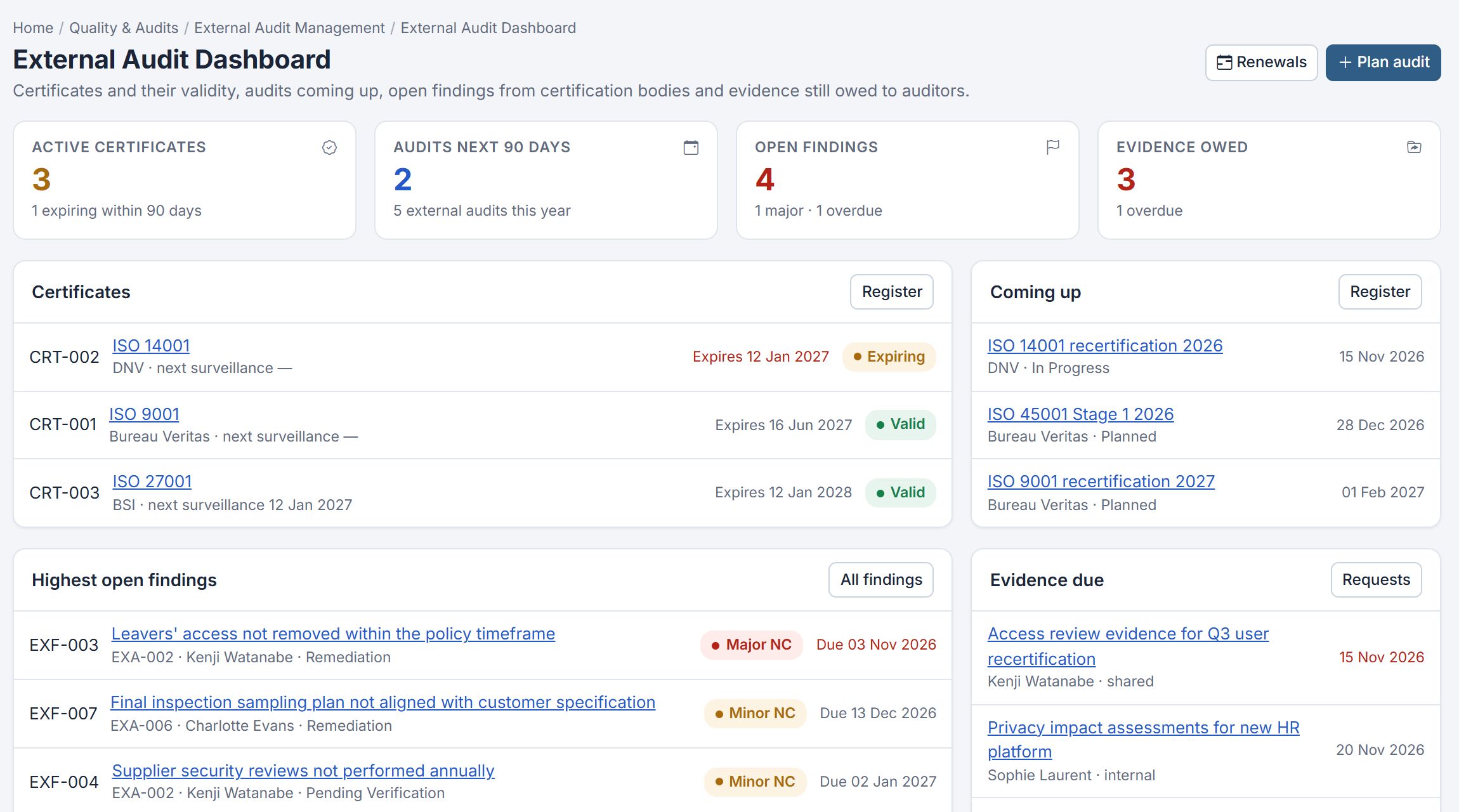
Organisations certified to more than one standard, or across several sites, can hold certificates with different issue dates, certification bodies and cycles. A simple register prevents missed dates.
- Record each certificate with its standard, scope, sites and certification body.
- Store issue and expiry dates, and the dates of upcoming audits.
- Assign an owner responsible for each renewal.
- Set reminders well ahead of each audit and expiry.
A certificate that lapses because a date was missed is an avoidable and costly failure.
Aligning cycles
Organisations with several standards often benefit from aligning their certification cycles, so that ISO 9001, ISO 14001 and ISO 45001 are audited together. Combined audits reduce disruption and cost, and certification bodies can usually help align dates over one cycle.
04 · Close the loop on findings
Previous findings will be checked.
The certification body will follow up on nonconformities raised at the last audit. Corrective actions should be complete and, ideally, their effectiveness reviewed before the next visit.
Tracking external findings alongside internal ones gives one view of open actions and shows the auditor that findings are handled through the same disciplined process.
Opportunities for improvement deserve attention too. They are not mandatory, but an auditor who raised one last year will often ask what was done with it. Recording a decision, even a decision not to act and why, demonstrates a mature system.
05 · Plan recertification early
Treat it as a full review of the system.
Recertification is a good moment to step back. Has the scope changed? Are there new sites, products or regulations? Are any standards moving to a new edition?
Starting preparation several months ahead leaves time to run a full internal audit cycle and a management review that looks at the whole three years.
Common pitfalls
- Post-certification drift: internal audits and management reviews postponed once the certificate arrives.
- Unreported changes: new sites, products or major reorganisations not notified to the certification body.
- Open findings at the next visit: corrective actions from the last audit still incomplete.
- Dates held by one person: renewal dates known only to one manager, with no reminders when they are away.
06 · Certora external audit
Certificates, audits and renewals in one register.
Certora External Audit Management keeps a certification register with every certificate, its certification body and renewal dates, and plans surveillance and recertification audits against them. Certificates and renewal management show what is due and when.
Findings from each external audit are answered with root cause and corrective action, and evidence is shared with auditors through a restricted portal. Internal audits, management reviews and corrective actions run in the same system, so the topics surveillance auditors check are always current.
See preparing for an ISO certification audit for the initial certification stages.