Risk-based thinking in ISO 9001 is practical, not theoretical.
What ISO 9001 clause 6.1 asks for on risks and opportunities, how to keep it proportionate, and how to connect risks to processes, actions and review.
The principle
The point of identifying risks is to change what you do, not to fill a register.
When ISO 9001:2015 introduced risk-based thinking, many organisations responded by creating a large risk register that was reviewed once a year. The standard asked for something more useful and, in many ways, simpler.
Risk-based thinking is less about a register and more about a habit: considering what could go wrong, and what opportunities exist, whenever you plan and run processes. The register is a tool for recording that thinking, not the thinking itself. Organisations that understand the difference end up with fewer, better-managed risks and far less paperwork.
01 · Start with context
What clause 6.1 actually requires.
Clause 6.1 asks the organisation, when planning the quality management system, to consider the issues identified in clause 4.1 and the requirements of interested parties in clause 4.2, and to determine the risks and opportunities that need to be addressed. The aim is to give assurance that the system can achieve its intended results, enhance desirable effects, prevent or reduce undesired effects, and achieve improvement.
You must plan actions to address them, integrate and implement those actions into your processes, and evaluate their effectiveness. ISO 9001 does not require a formal risk management method or a documented risk management process, but ISO 31000 offers useful guidance if you want one.
Where else risk appears in ISO 9001
Risk-based thinking runs through the whole standard: in clause 4.4, processes must address risks and opportunities; in 9.3, management review considers the effectiveness of actions taken on them; in 10.2, corrective action must update risks and opportunities where necessary. Clause 6.1 is the anchor, but the thinking is meant to be everywhere.
02 · Keep it proportionate
Focus on risks that affect conformity and customers.
The standard asks that actions be proportionate to the potential impact on the conformity of products and services. That is a helpful filter.
- Customer impact: risks to delivery, quality and satisfaction.
- Process risks: single points of failure, capacity limits, key-person dependency.
- External risks: supplier failure, regulatory change, market shifts.
- Opportunities: new technology, new markets, efficiency gains.
A focused register that people actually use is better than an exhaustive one that nobody reads.
Where risks come from
The best sources of risk are already in the system. Issues identified under clause 4.1, requirements of interested parties under 4.2, process maps, audit findings, nonconformities, complaints and incidents all point to things that could go wrong. Workshops with process owners are useful, but a risk register disconnected from these sources tends to list generic risks that apply to every organisation and help none.
04 · Act on what matters
Treatments belong in your processes.
Clause 6.1.2 asks that actions are integrated into the management system processes. A risk of late supplier deliveries might be treated by adding a second source, a safety stock rule, or a supplier performance KPI, all of which live in normal operations.
Each treatment should have an owner and a due date, and the risk should be reassessed once it is complete.
ISO 9001’s notes describe the options: avoiding the risk, taking risk to pursue an opportunity, eliminating the source, changing the likelihood or consequences, sharing the risk, or retaining it by informed decision. Recording which option was chosen, and why, makes the decision traceable.
05 · Review and evaluate
Risks change, so the register must too.
Effectiveness of actions on risks and opportunities is a required management review input. Beyond that, risks should be reviewed whenever something significant changes: a new product, a lost customer, a new regulation, or an incident.
Opportunities deserve the same discipline. Recording them alongside risks keeps improvement on the agenda rather than only threat reduction.
Common pitfalls
- Register for the auditor: a long list created for certification and never used to make decisions.
- Generic risks: "fire", "cyber attack" and "economic downturn" with no link to specific processes.
- No reassessment: treatments completed but the residual rating never updated.
- Opportunities ignored: a register containing only threats, missing half of what clause 6.1 asks for.
06 · Certora risk management
Risks and opportunities, scored and treated.
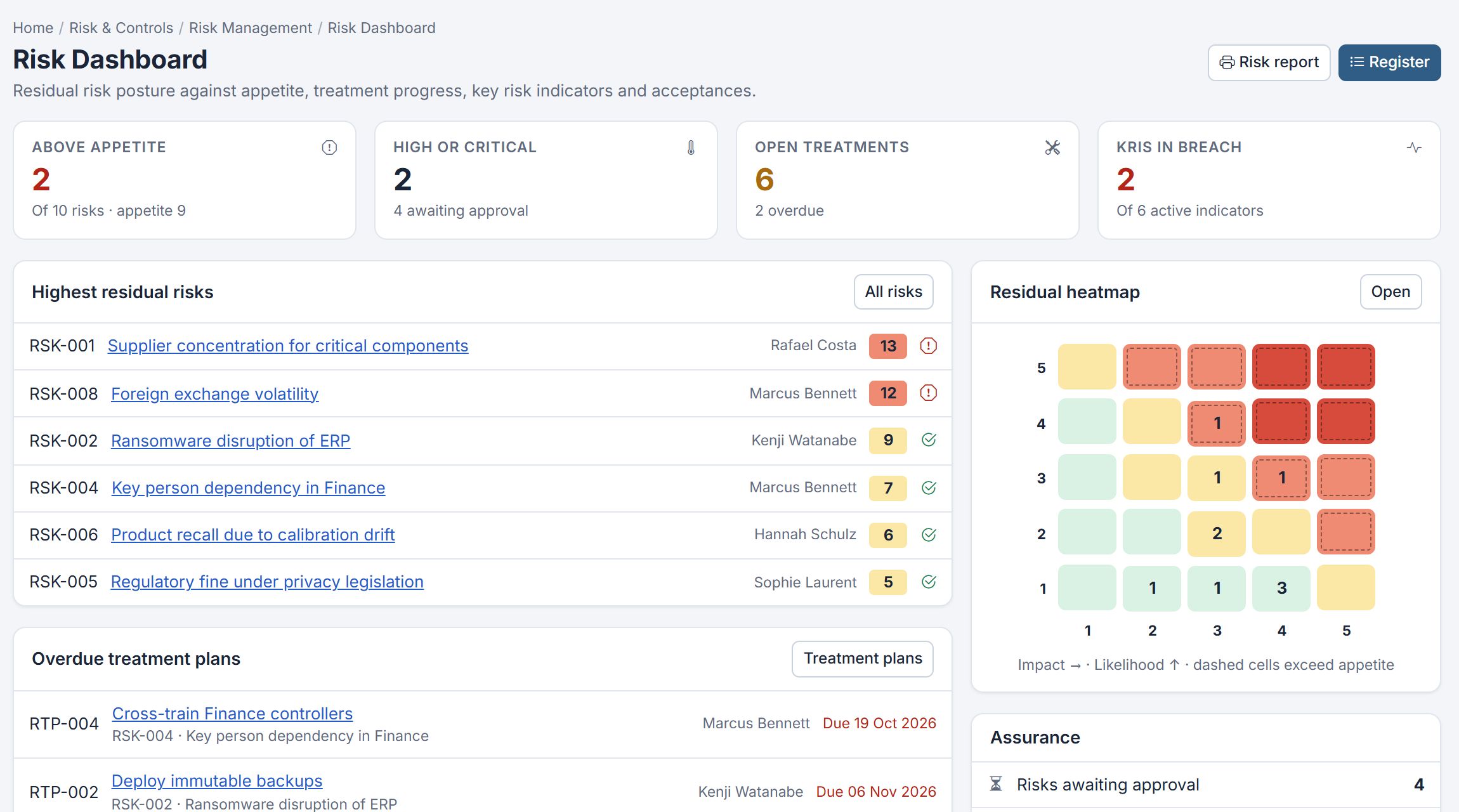
Certora Risk Management identifies, scores, treats, accepts and monitors risks and opportunities against your risk appetite, with every rating and decision traceable. Risks carry inherent and residual scores on a likelihood and impact matrix, treatment plans have owners and due dates, and reviews keep ratings current.
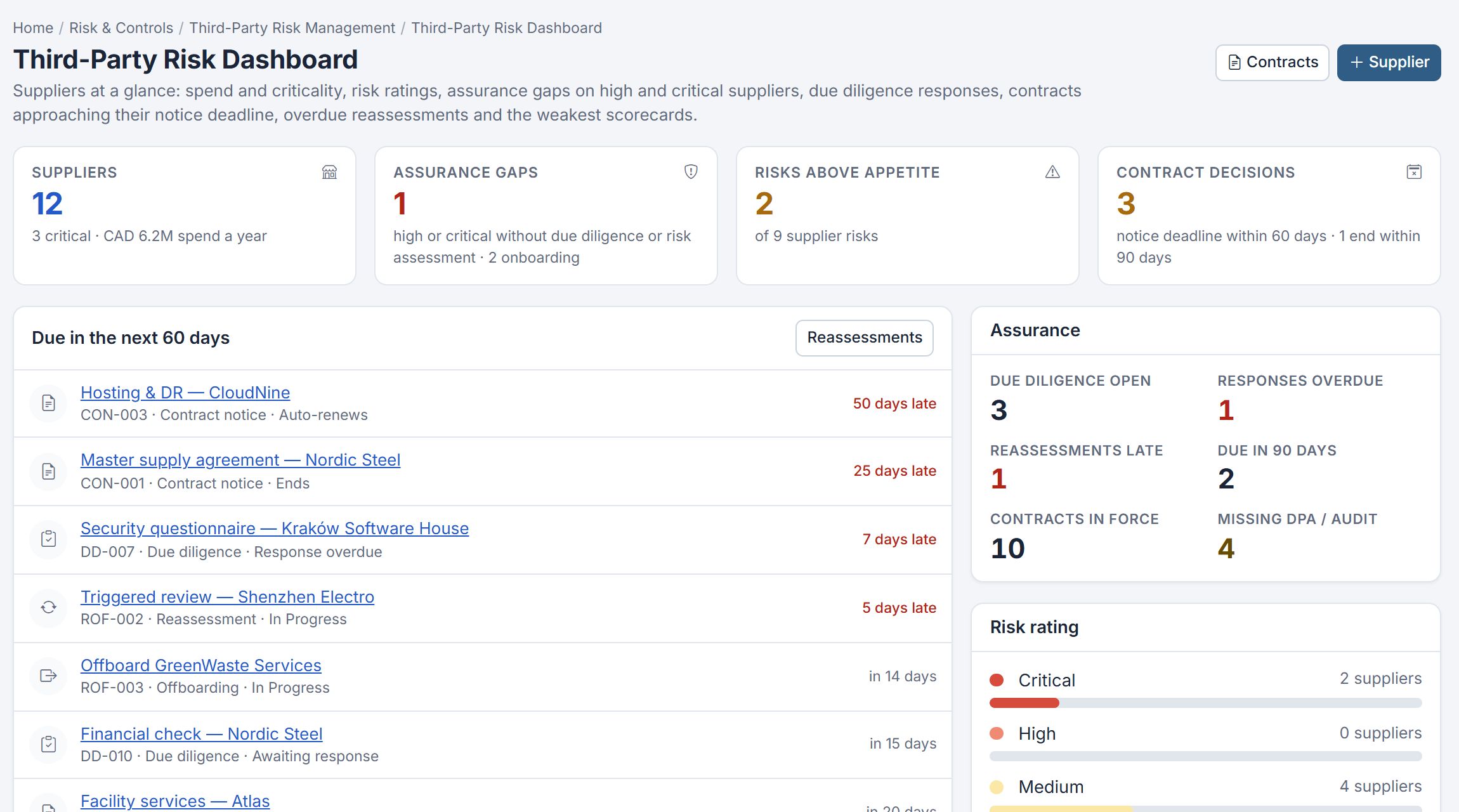
A separate risk and opportunity register rates opportunities by likelihood and benefit, in line with ISO 9001 clause 6.1. Risks link to the processes, controls, audits and nonconformities they relate to across Certora. See a risk register leadership can act on for scoring and appetite in more depth.