Quality objectives should be measurable, owned and reviewed.
How to set quality objectives that meet ISO 9001 clause 6.2: consistent with policy, measurable, owned, resourced, monitored and reviewed through the year.
The principle
An objective that nobody measures is a slogan. An objective nobody owns is a wish.
Quality objectives are often written once a year, printed on a poster and forgotten. Auditors then ask how an objective is progressing, and the answer involves finding last quarter’s spreadsheet.
Objectives are meant to turn the quality policy into measurable commitments that guide where effort goes. When they are vague, unowned or unmonitored, they guide nothing. When they are specific, measured and reviewed, they become one of the clearest ways leadership can show the management system is working towards something.
01 · Start with context
What clause 6.2 requires.
ISO 9001 clause 6.2 requires quality objectives at relevant functions, levels and processes needed for the quality management system. They must:
- Be consistent with the quality policy.
- Be measurable.
- Take into account applicable requirements.
- Be relevant to conformity of products and services and to enhancement of customer satisfaction.
- Be monitored, communicated, and updated as appropriate.
When planning how to achieve them, the organisation must determine what will be done, what resources will be required, who will be responsible, when it will be completed and how the results will be evaluated.
Objectives at different levels
The standard asks for objectives at relevant functions, levels and processes, not only at the top. A company objective to improve on-time delivery might cascade to a production objective on schedule adherence and a purchasing objective on supplier delivery performance. Cascading connects strategy to daily work.
02 · Connect to the policy
Objectives make the policy concrete.
- Start from the commitments in the quality policy.
- Translate each into one or more objectives with a clear measure.
- Cascade objectives to functions and processes where relevant.
An objective that cannot be traced to the policy or strategy is worth questioning.
Context matters as well. Issues identified under clause 4.1, interested party requirements under 4.2 and risks under 6.1 should all inform which objectives the organisation sets. An objective that responds to a known risk or a customer requirement has an obvious reason to exist.
03 · Make them measurable
A measure, a baseline and a target.
- Define the measure and how it is calculated.
- Record the current baseline.
- Set a target and a date.
- Link the measure to a KPI where one exists.
"Improve customer satisfaction" becomes "Raise NPS from 32 to 40 by the end of the year."
SMART, briefly
Many organisations use the SMART test: specific, measurable, achievable, relevant and time-bound. It is a useful check, though the standard’s own list is the requirement. In practice, the most common failure is measurability: objectives that sound good but have no agreed way of telling whether they were achieved.
04 · Plan delivery
Initiatives, owners and resources.
Each objective needs a plan: the initiatives or actions that will move the measure, who owns them, what resources they need and when they will be done. Milestones make progress visible before the deadline.
Resourcing deserves honesty. An objective with no budget, no time allocated and no named owner is a wish. Linking objectives to initiatives with resources makes the commitment real, and makes it easier to discuss trade-offs when resources are tight.
05 · Monitor and review
Through the year, not at year end.
Progress should be monitored at a regular cadence, quarterly at least, and reviewed at management review, where the extent to which quality objectives have been met is a required input. Objectives can be updated when circumstances change, with the reason recorded.
Communication completes the loop. People whose work contributes to an objective should know what it is, how progress is going and what their part is. That supports the awareness requirement in clause 7.3 as well as clause 6.2.
Common pitfalls
- Poster objectives: statements on a wall with no measure, owner or plan.
- Too many objectives: a long list that dilutes focus and resources.
- Year-end surprise: progress checked only when the year is over.
- Unexplained changes: targets quietly revised without recording why.
06 · Certora strategy management
Objectives measured, delivered and reviewed.
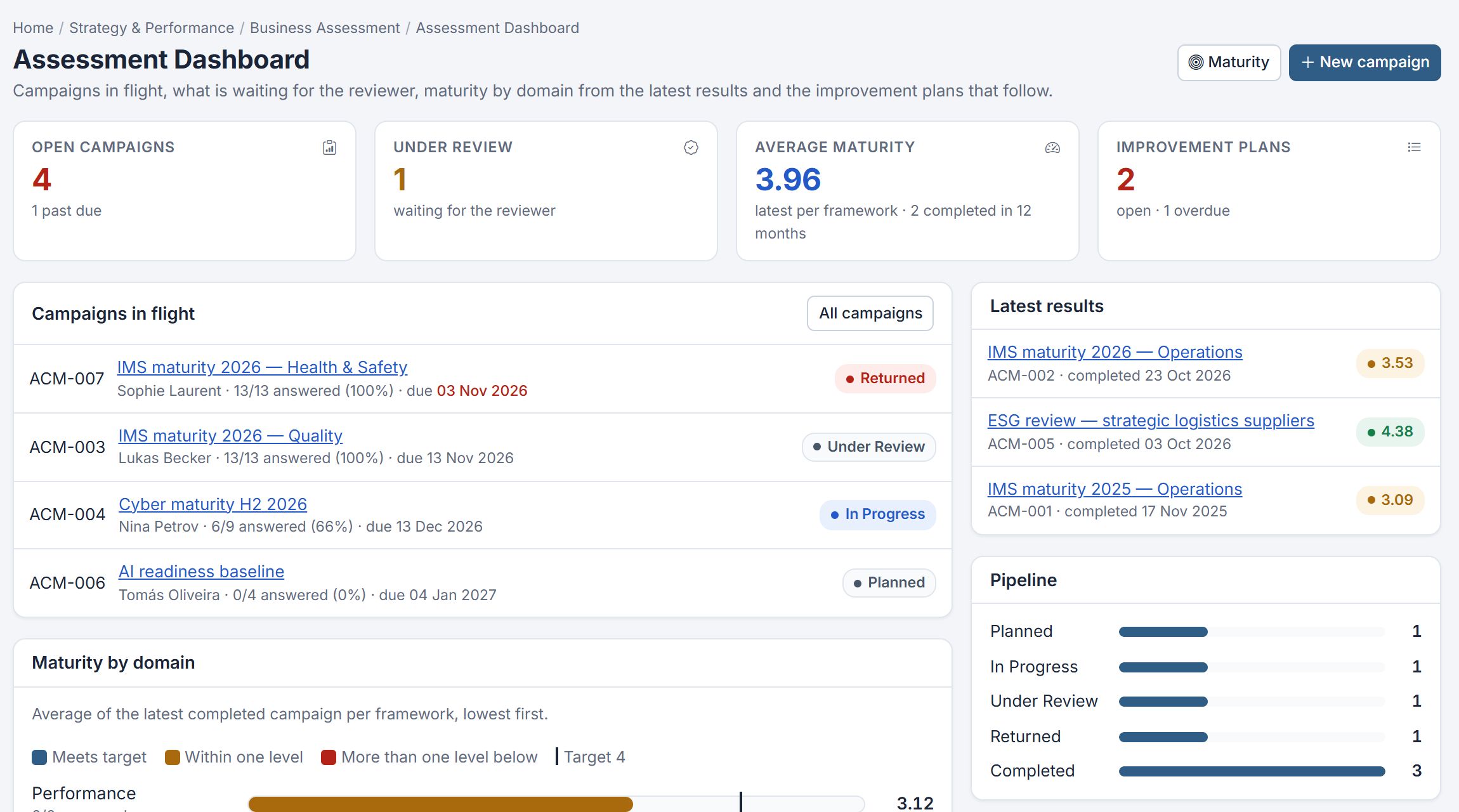
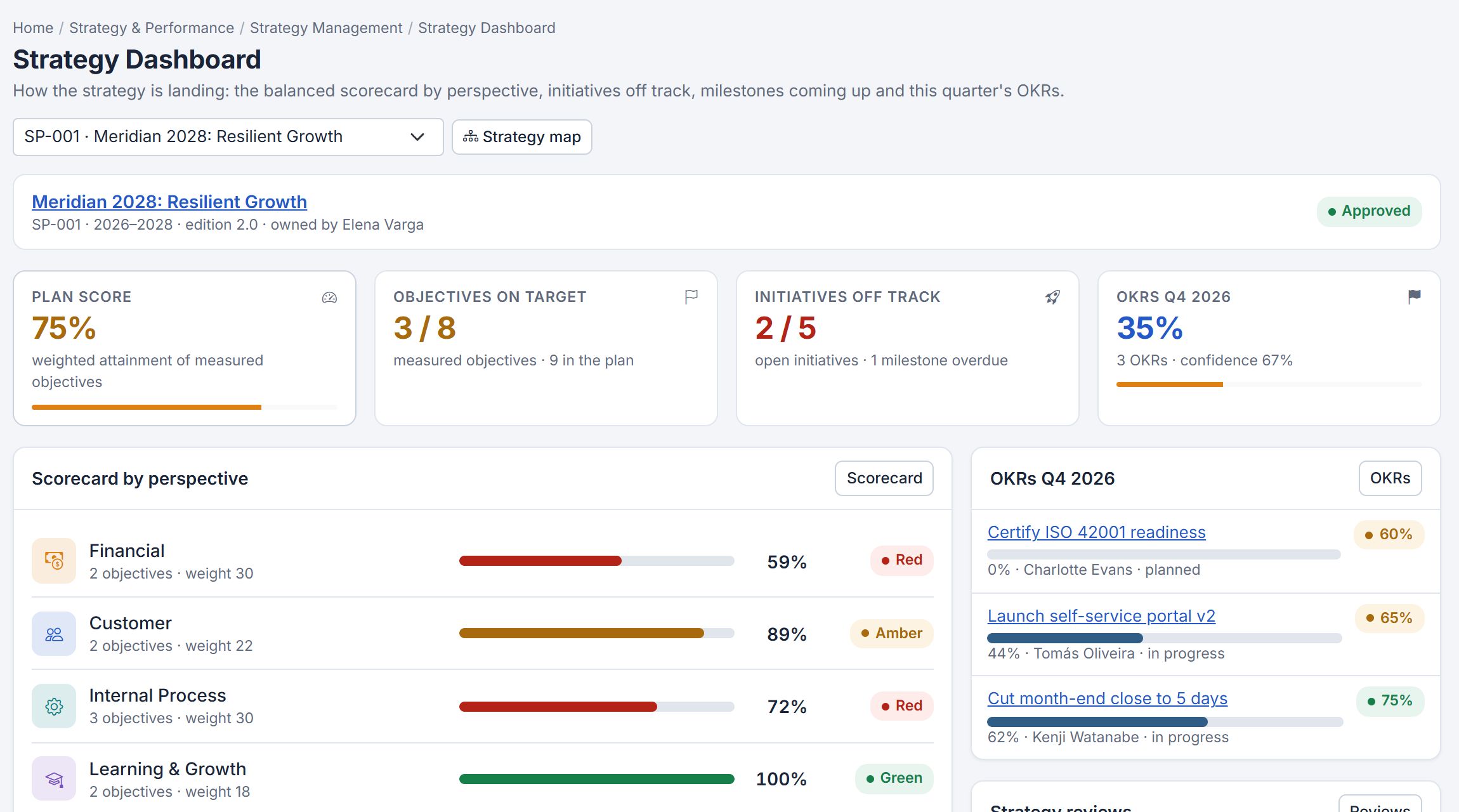
Certora Strategy Management sets multi-year strategic plans with weighted balanced-scorecard objectives, measures results, and delivers through initiatives and milestones. Quarterly steering uses OKRs, and plans are reviewed with a frozen scorecard snapshot.
Measures connect to KPI Management, so objectives use the same approved results, and objective status flows into management review. Read connecting strategy to quarterly execution for the planning cadence.