Project governance works best with clear stage gates and approved charters.
How to govern projects with an approved charter, a work breakdown, stage-gate approvals and resource balancing, in line with ISO 21502 guidance.
The principle
A stage gate is a decision point. If nobody can say no at a gate, it is just a milestone.
Projects that run into trouble usually show the signs early: unclear scope, missing approval, optimistic schedules. Stage gates exist so that someone looks at those signs deliberately, before more money and time are committed.
Without gates, projects build momentum that is hard to stop. Each month of work makes the next month easier to justify, even when the original business case has weakened. Gates create planned moments to step back and ask whether the project should continue, change or stop, while those options are still affordable.
01 · Start with context
Why project governance matters.
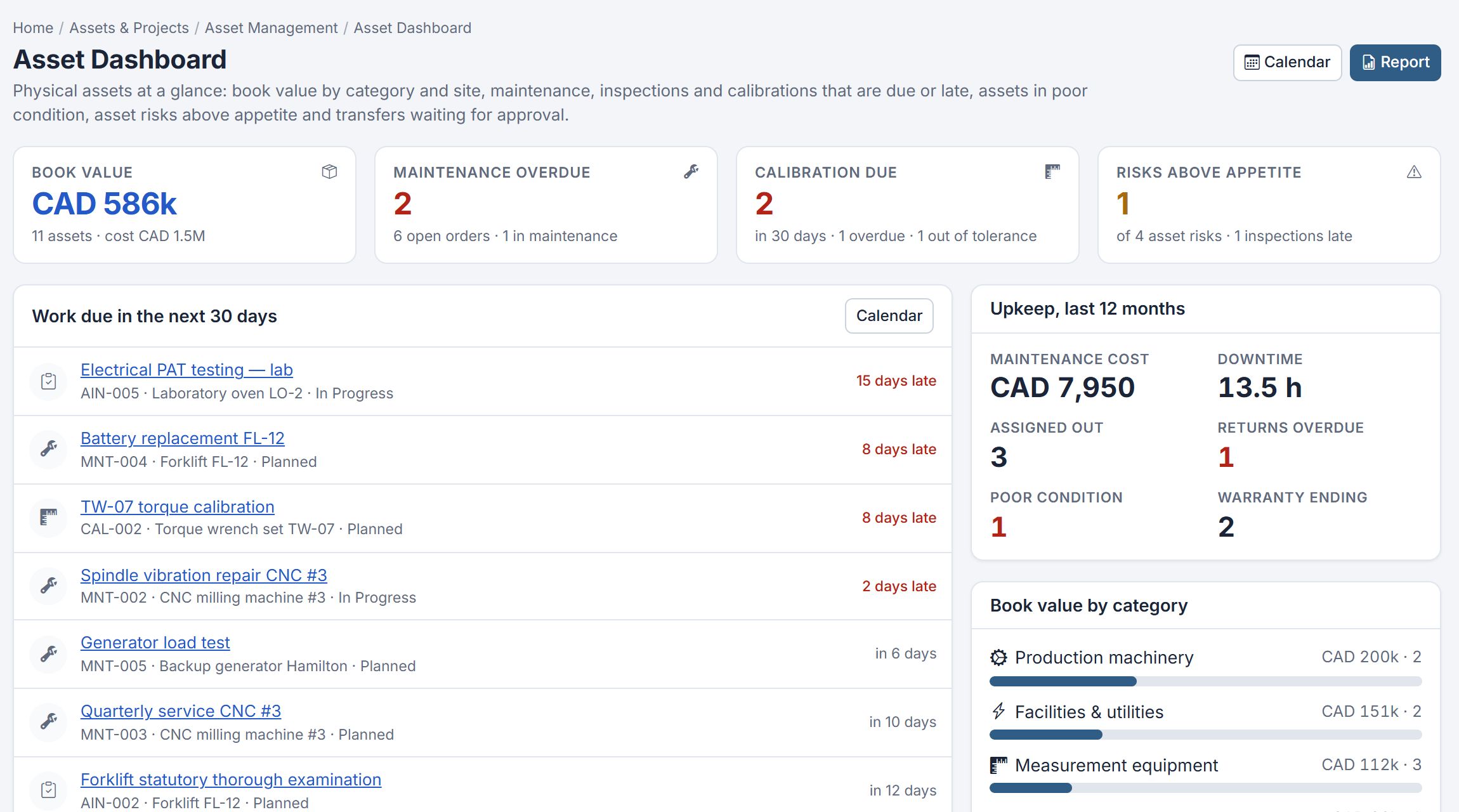
ISO 21502, Project, programme and portfolio management — Guidance on project management, describes governance, roles, the project lifecycle and the practices that support successful delivery. It emphasises that projects should be justified, directed and controlled through defined decision points.
For organisations with management systems, projects are also where change happens, so they connect to ISO 9001 clause 6.3 on planning changes and clause 8.3 where projects involve design and development. They also introduce risks that belong in the risk register.
Roles in project governance
Clear roles make governance work. A sponsor owns the business case and makes go or no-go decisions. A project manager plans and delivers. A steering group or board, for larger projects, provides oversight and resolves issues beyond the project manager’s authority. Defining these roles in the charter avoids confusion when decisions are needed.
02 · Start with a charter
Authorise the project formally.
- Purpose: the business problem or opportunity.
- Scope: what is in and, just as importantly, what is out.
- Objectives: measurable outcomes.
- Sponsor and manager: who authorises and who delivers.
- Budget and timeline: initial estimates.
An approved charter gives the project a mandate and a baseline to measure against.
The value of "out of scope"
Many scope disputes arise because nobody wrote down what the project would not do. Listing explicit exclusions in the charter, such as "integration with the legacy warehouse system is out of scope", gives the project manager a clear basis for declining requests that would otherwise creep in.
03 · Plan the work
Breakdown, dependencies and schedule.
- Break the work into deliverables and tasks.
- Identify dependencies between tasks.
- Schedule the work on a timeline.
- Assign resources and check they are available.
A Gantt timeline makes the critical path and dependencies visible.
The work breakdown should be driven by deliverables, not activities. Breaking the project into the things it will produce, such as a configured system, trained users and migrated data, and then into the tasks to produce each one, keeps planning focused on outcomes and makes progress easier to measure.
04 · Pass through gates
Decide at each stage.
At each gate, typically after initiation, planning, design and before go-live, a decision-maker reviews the project against criteria: is the business case still valid, are risks acceptable, is the plan realistic? The outcome is go, hold, change or stop.
Recording gate decisions creates accountability and a clear history.
Gate criteria
Criteria should be defined in advance and appropriate to each stage. An initiation gate might require an approved charter and an initial risk assessment. A design gate might require approved requirements and a validated design. A go-live gate might require completed testing, trained users and a rollback plan. Clear criteria make gate decisions objective rather than a negotiation.
05 · Balance resources
Across the portfolio.
Projects compete for the same people. A portfolio view of resource demand shows over-allocation before it causes delays, and helps prioritise projects that matter most.
Portfolio governance also decides which projects start in the first place. Not every good idea can be resourced at once. Prioritising projects against strategic objectives, and starting fewer projects so each can finish on time, usually delivers more than running everything in parallel.
Common pitfalls
- No charter: projects started on a verbal agreement, with scope disputes later.
- Gates as formality: every gate passed automatically, regardless of the evidence.
- Over-committed people: the same specialists assigned to several projects at full capacity.
- Stopping is taboo: failing projects continued because nobody wants to admit the business case has gone.
06 · Certora project management
Charter, gates, resources and Gantt.
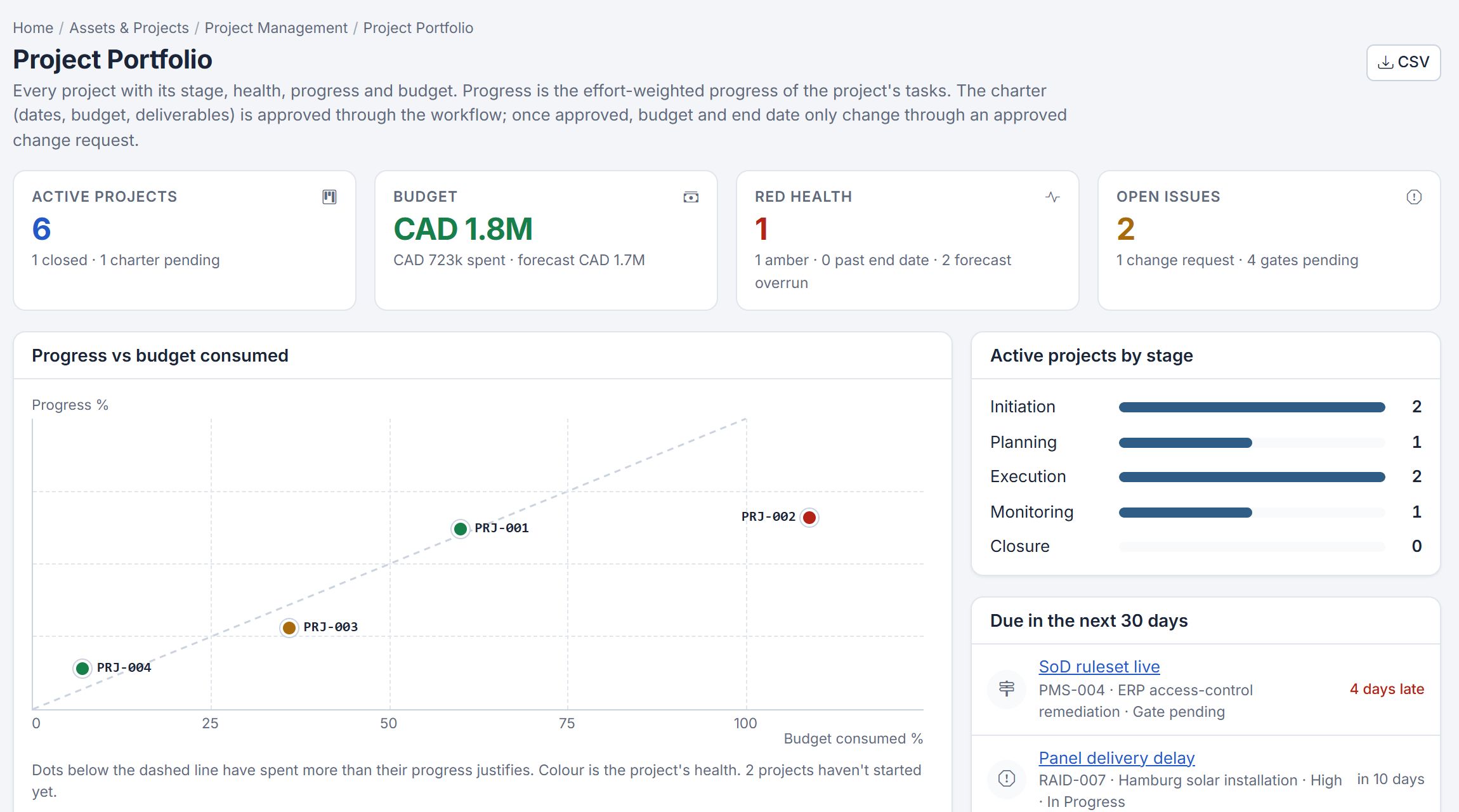
Certora Project Management runs projects from an approved charter. Work is planned with a breakdown and dependencies, scheduled on a Gantt timeline, and passed through approval gates, with resources balanced across the portfolio.
Budget, change, risks and issues are controlled in the same place, and the project portfolio shows status across all projects. Read project change control and lessons learned for the rest of the lifecycle.