Events deserve the same controls as any other service you deliver.
How to plan workshops, conferences and supplier days with quality controls: readiness checks, agendas, capacity-controlled registration, check-in and records.
The principle
An event is a service delivered on a fixed date. There is no second chance to get it right on the day.
Workshops, supplier days, town halls and training conferences are often run from spreadsheets and email threads. They are services delivered to customers, suppliers or employees, and when they go wrong, the impact on reputation is immediate.
Unlike most services, an event cannot be fixed after delivery. If the venue is double-booked, the speaker never received the agenda or registration exceeded capacity, the problem happens in front of everyone. That is why events benefit from the same controls quality teams apply to other services: defined requirements, readiness checks and records.
01 · Start with context
Events are controlled service delivery.
ISO 9001 clause 8.5 covers the control of production and service provision under controlled conditions, including the availability of documented information defining the characteristics of the service, suitable infrastructure, competent persons and actions to prevent human error. For organisations that run events as part of their service, or for internal events that matter to stakeholders, the same principles apply.
ISO 20121 adds a management system framework specifically for sustainable event management, covering environmental, social and economic impacts of events.
Internal events count too
Supplier days shape supplier relationships. Training conferences deliver competence. Town halls communicate strategy and policy, which supports ISO 9001’s awareness requirements. Treating these as controlled activities, with records, gives the management system evidence it can use.
02 · Define readiness
What must be true before the event starts.
- An organiser and an approved venue.
- An agenda with sessions, times and speakers.
- Invitations sent with a clear registration deadline.
- Risks identified, such as capacity, safety or supplier dependencies.
Requiring these before an event can move to "in progress" prevents last-minute surprises.
Risks worth considering
Typical event risks include venue unavailability, speaker cancellation, technical failure, capacity overrun, weather for outdoor events, health and safety hazards, catering and dietary requirements, and accessibility for attendees with disabilities. Larger events may need a dedicated risk assessment; smaller ones can use a short checklist. Linking identified risks to the event record means they are reviewed when it matters.
03 · Plan the agenda
Sessions that fit the time and space.
- Schedule sessions within the event hours.
- Check rooms for clashes.
- Assign speakers and facilitators.
- Share the agenda with attendees in advance.
Speakers need their own preparation: confirmed slot, room, equipment and audience details. Sending speakers a briefing a week ahead, and confirming receipt, avoids the classic failure of a presenter discovering on the day that their slot moved.
04 · Control registration
Capacity and closing dates.
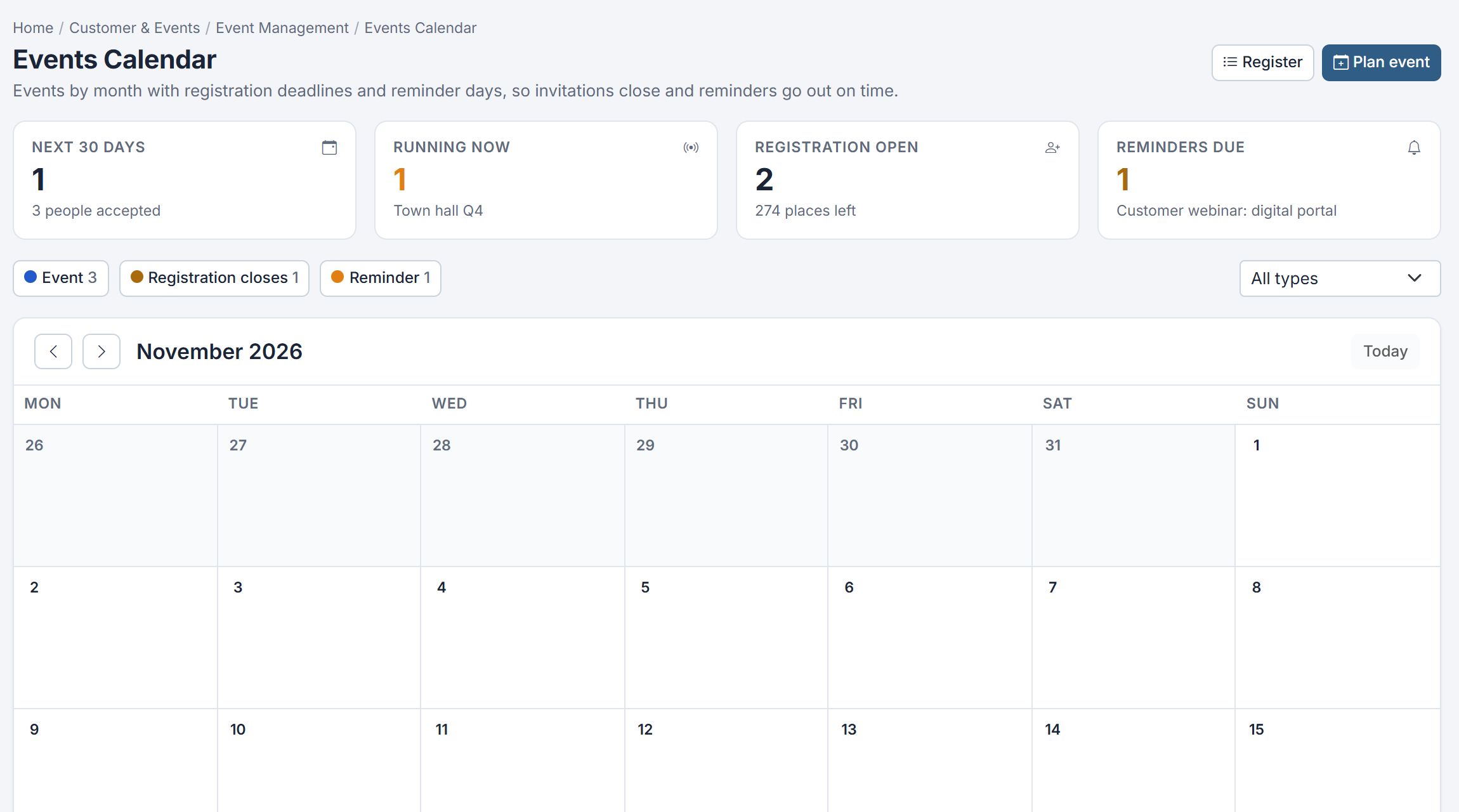
Registration should respect capacity limits and closing dates, with confirmations sent to attendees. Bulk invitations, for example to a whole department or supplier list, save time, while RSVP tracking shows expected attendance well before the day.
Waitlists help when demand exceeds capacity. Rather than turning people away, a waitlist allows places freed by cancellations to be offered in order, and shows organisers whether a repeat session is justified.
05 · Record the day
Check-in and attendance as evidence.
Checking attendees in on the day creates an accurate attendance record. For training events or regulatory briefings, that record may be required evidence. For any event, it allows follow-up with those who attended and those who did not.
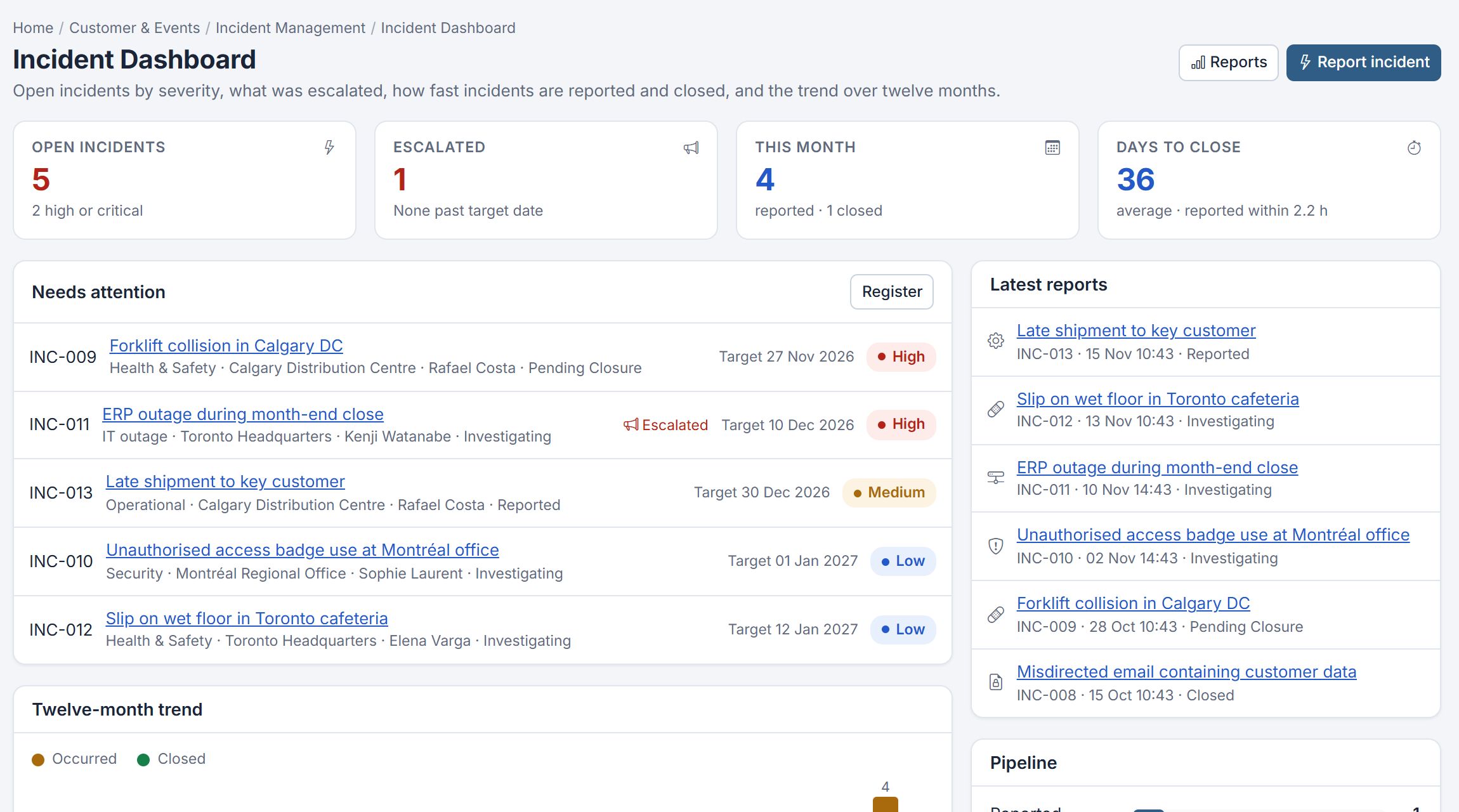
Day-of incidents, such as a first-aid case or a security issue, should be recorded and, where significant, raised in incident management. A post-event summary then captures attendance, issues and feedback while they are fresh.
Common pitfalls
- Spreadsheet planning: event details spread across files and email threads, with no single status.
- No readiness gate: events going ahead without confirmed venue, agenda or invitations.
- Capacity ignored: registration left open after the room is full.
- No attendance record: training or briefings with no evidence of who attended.
06 · Certora event management
From calendar to check-in.
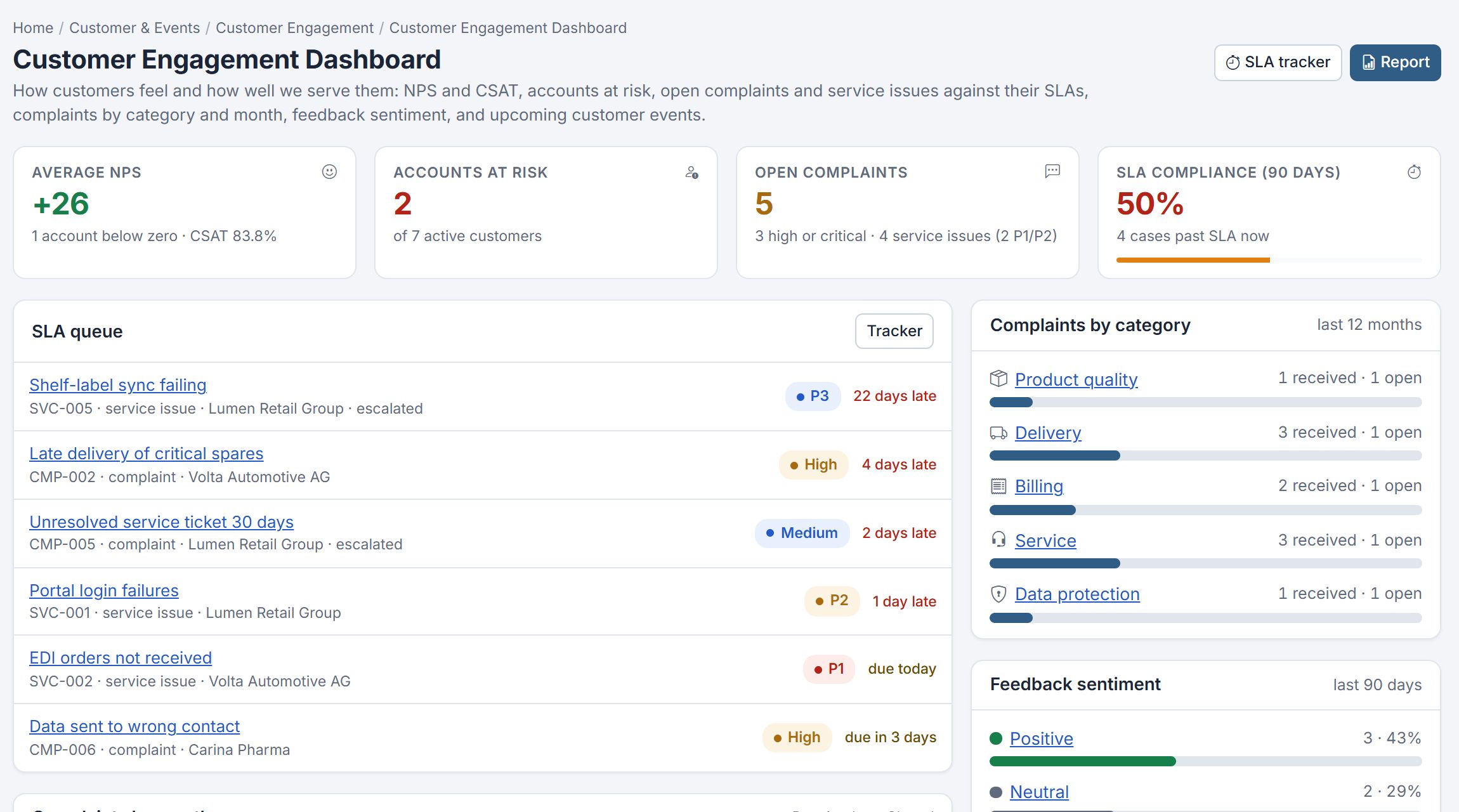
Certora Event Management plans workshops, conferences, town halls, supplier days and webinars with a calendar and register. Each event has an agenda by session, invitations with capacity and closing dates, and day-of check-in, with linked risks, incidents and CAPAs.
Events cannot start without an organiser, venue, agenda and invitations, and cannot complete without check-ins and a post-event summary. Read when an event falls short for how feedback leads to improvement.