Complaint handling that customers trust, aligned with ISO 10002.
A practical complaint handling process aligned with ISO 10002: capturing feedback, response and resolution SLAs, root cause, corrective action and escalation.
The principle
Customers judge a complaint process by how quickly they are heard and whether the problem stays fixed.
A complaint is one of the most valuable pieces of information a customer can give. It is also one of the easiest to lose: in an email inbox, a sales note or a support ticket that nobody connects to the quality system.
Customers who complain are telling you something many others experienced but did not mention. Handled well, a complaint can strengthen the relationship: research on service recovery consistently suggests that customers whose problems are resolved quickly and fairly often become more loyal than those who never had a problem. Handled badly, it confirms the customer’s worst impression.
01 · Start with context
What the standards expect.
ISO 9001 clause 9.1.2 asks organisations to monitor customer perceptions of the degree to which their needs and expectations have been fulfilled, and clause 8.2.1 includes handling customer feedback, including complaints, in customer communication. Clause 10.2 explicitly includes nonconformities arising from complaints.
ISO 10002, Customer satisfaction — Guidelines for complaints handling in organizations, provides detailed guidance built around principles such as visibility, accessibility, responsiveness, objectivity, confidentiality, a customer-focused approach, accountability and continual improvement.
Why a standard for complaints?
ISO 10002 is a guidance standard, not a certifiable one, but it captures a useful consensus on what good complaint handling looks like. Using it as a reference helps organisations design a process that customers find fair and that produces improvement, not just resolved tickets.
02 · Capture every complaint
From any channel.
- Make it easy for customers to complain, through the channels they already use.
- Record every complaint centrally with the customer, product or service and description.
- Distinguish general feedback from formal complaints, and allow feedback to become a complaint when it warrants one.
A complaint recorded in one place can be tracked, analysed and learned from.
Staff across the organisation need to know that complaints raised informally, in a phone call with a sales manager or a comment to a delivery driver, should be recorded too. Training front-line staff to recognise and log complaints closes the most common gap in capture.
03 · Respond within SLA
Acknowledge, then resolve.
- Acknowledge receipt promptly.
- Classify severity and set response and resolution targets.
- Keep the customer informed of progress.
- Resolve and communicate the outcome.
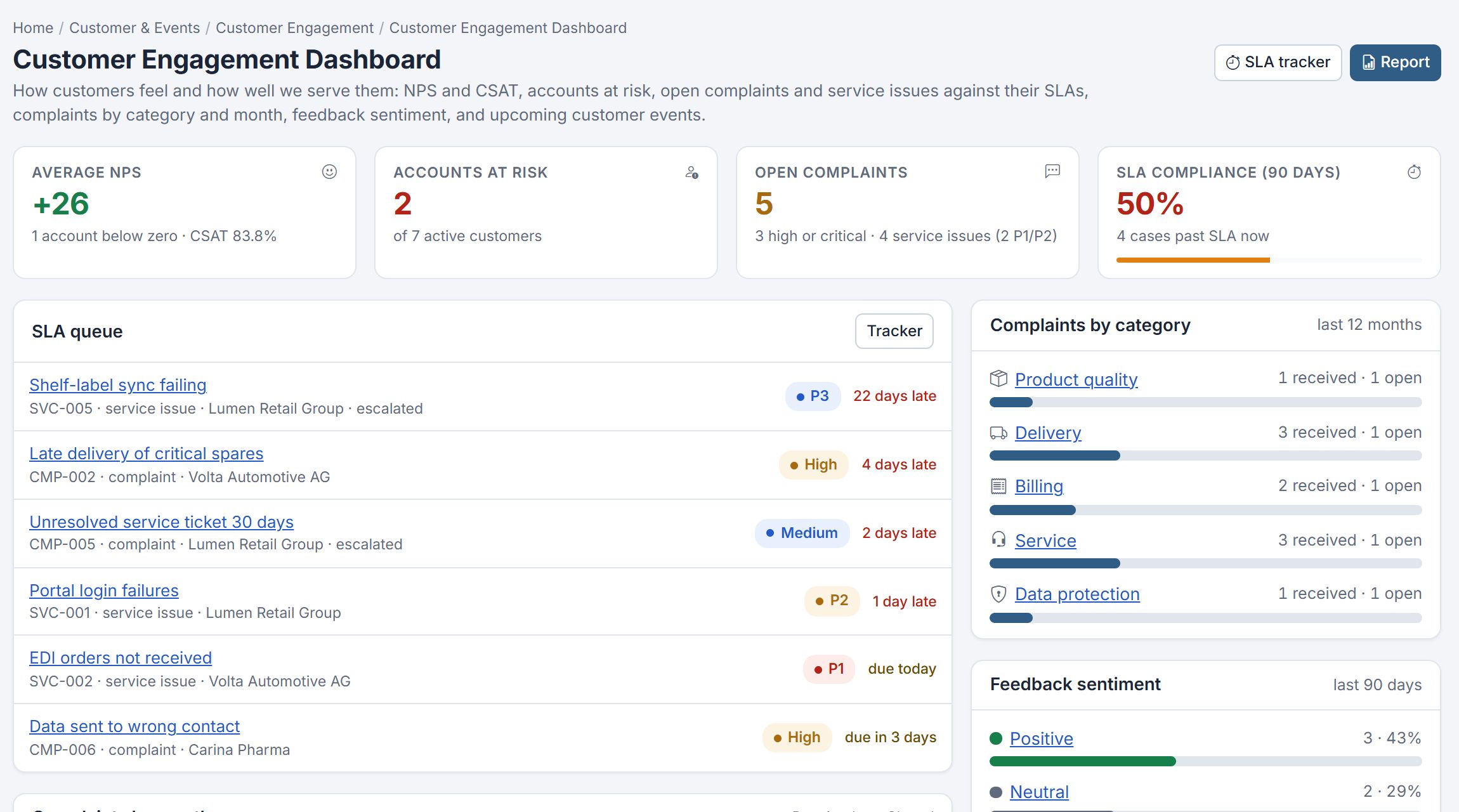
Response and resolution SLAs can vary with the customer’s service tier and the severity of the complaint, so the most important issues are handled fastest.
Communicating with the customer
Customers value being kept informed as much as fast resolution. A short update when investigation is under way, a clear explanation of the outcome, and an honest account of what will change reassure the customer that their complaint was taken seriously. Closing a complaint without telling the customer is one of the quickest ways to turn a resolved issue into a lost account.
04 · Find the root cause
Fix the system, not just the case.
Resolving a single complaint satisfies one customer. Understanding why it happened protects the rest. Significant complaints should go through root cause analysis and, where needed, corrective action, using the same discipline as any other nonconformity.
Analysis across complaints is equally important. Categorising complaints by product, process, cause and customer segment reveals patterns that no single case shows, and gives management review a clear view of where customer experience is breaking down.
05 · Escalate when needed
Some complaints are incidents.
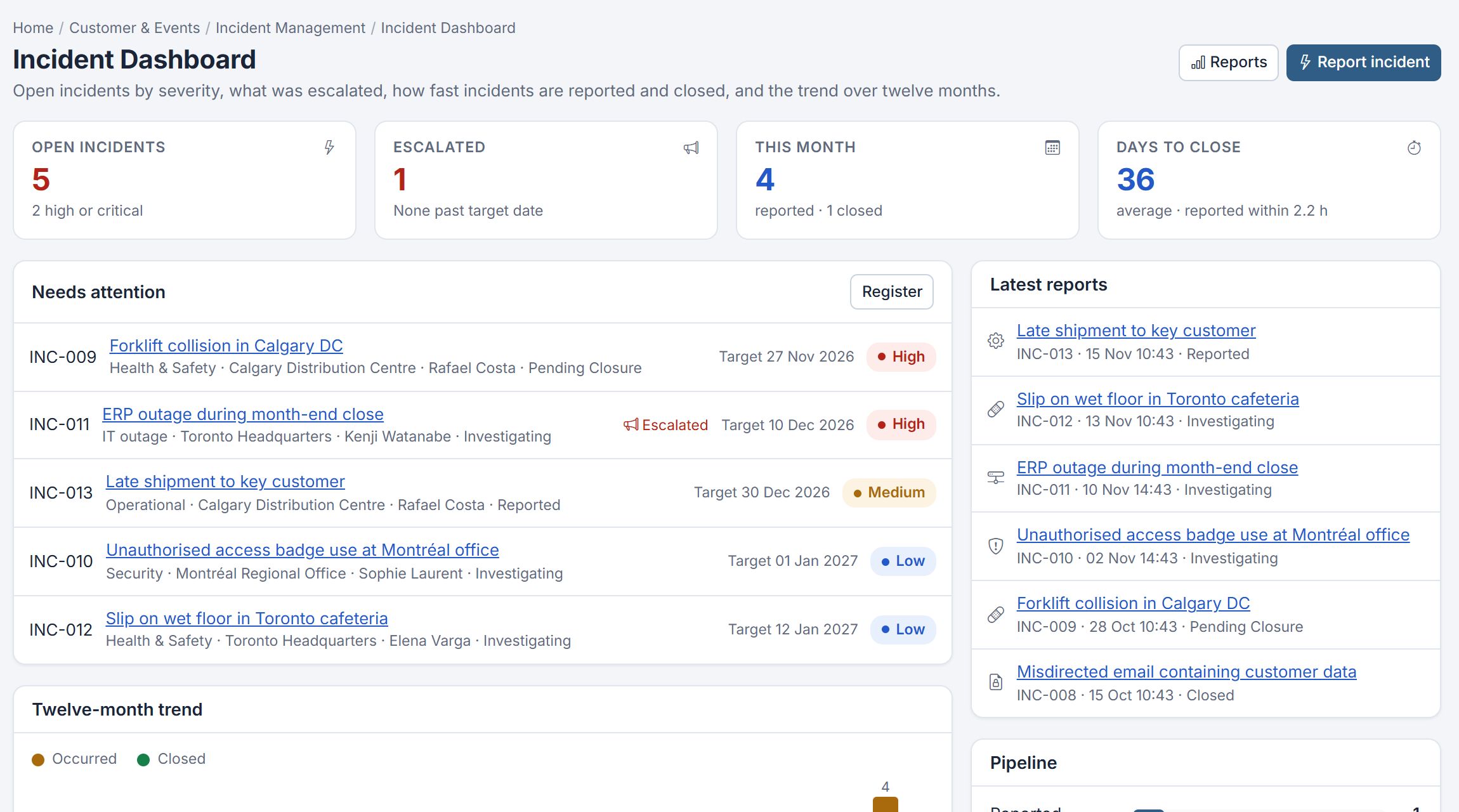
A complaint may reveal a safety issue, a data protection concern or a legal obligation. The process should allow escalation to incident management, compliance or senior management, with the link preserved.
Escalation criteria should be defined in advance: any complaint involving injury, a potential product recall, a data breach, a regulatory body or a threatened legal claim, for example. Clear criteria prevent serious issues being handled as routine service tickets.
Common pitfalls
- Complaints in inboxes: feedback scattered across email and phone notes, never recorded centrally.
- Resolution without analysis: each case closed individually, with no look at patterns.
- Silent closure: complaints resolved internally without telling the customer.
- Missed escalations: safety or legal issues handled as ordinary service complaints.
06 · Certora customer engagement
Complaints against response and resolution SLAs.
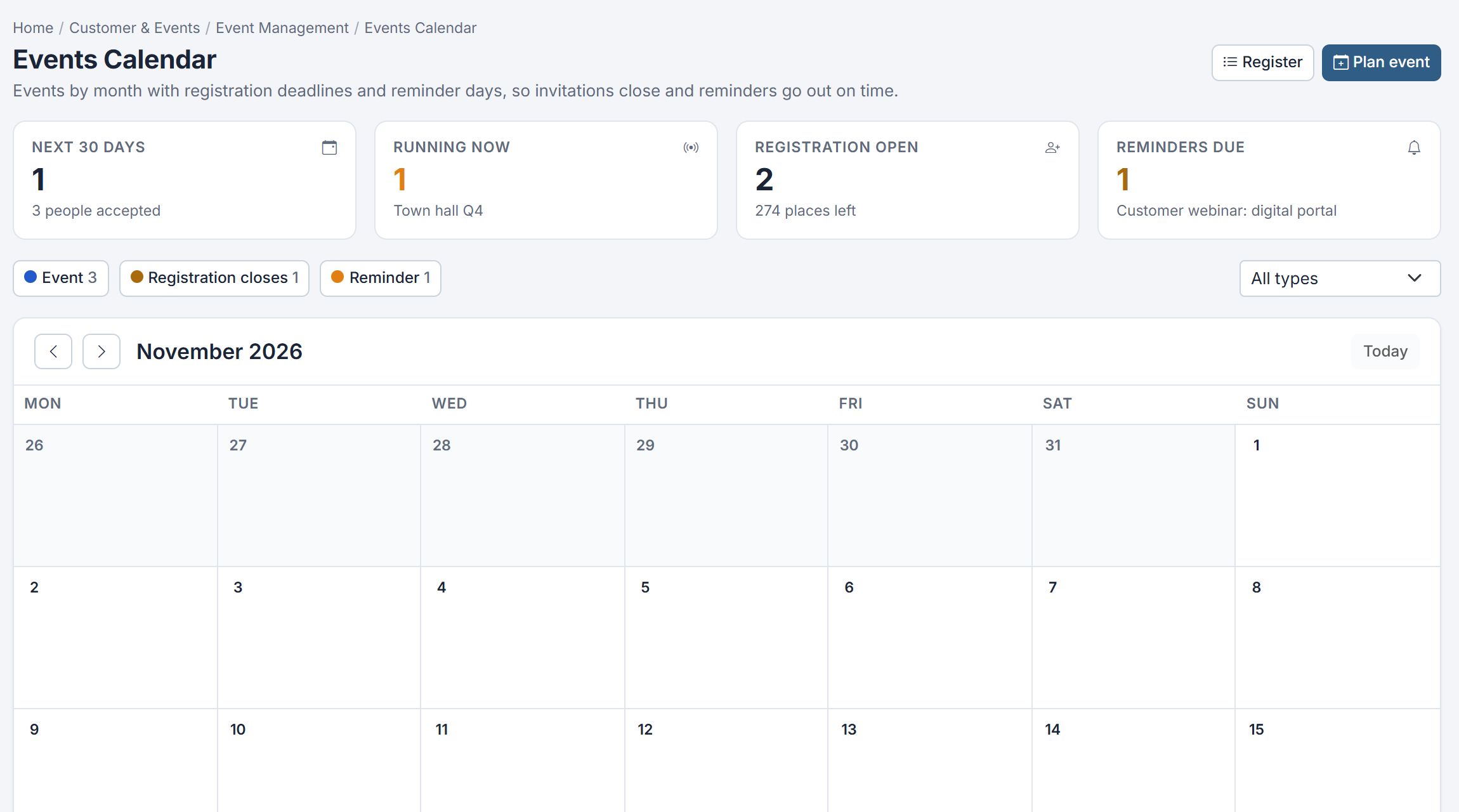
Certora Customer Engagement records customer accounts with SLA tiers and health, captures feedback that can become a complaint, and tracks complaints and service issues against response and resolution SLAs. Closure requires a response, a root cause and a resolution, high and critical complaints raise a CAPA, and complaints can be escalated to Incident Management.
Satisfaction surveys and the satisfaction report sit alongside. Read monitoring customer satisfaction for ISO 9001 for the measurement side.