Cross-module traceability shows how one record connects to everything it affects.
Why traceability between audits, nonconformities, risks, documents and training matters for ISO audits, and how a relationship explorer shows the whole chain.
The principle
Auditors follow trails. A connected system lets you follow them faster than they can.
An auditor picks a finding and asks what happened next. In a disconnected system, the answer involves searching three tools: the audit report, a CAPA spreadsheet and a document library. In a connected one, the chain is visible from the finding itself.
Traceability is what turns a collection of records into a management system. Each record on its own shows that something happened. The links between records show why it happened, what it led to and whether it worked. That chain of cause and effect is exactly what auditors, regulators and leaders want to understand.
01 · Start with context
Why traceability matters.
ISO management system standards do not use the word traceability for records, but they repeatedly assume it. Corrective actions should address the causes of nonconformities. Management review should consider audit results and actions taken. Risks should link to controls and treatments. Changes should consider their consequences. Each of these is a relationship between records.
ISO 9001 does use traceability explicitly in clause 8.5.2, for outputs where traceability is a requirement, and in clause 7.1.5.2 for measurement traceability. The same principle, being able to follow a chain from one point to another, applies to management system records generally.
Traceability as evidence of effectiveness
Auditors test effectiveness by following chains. If a finding led to a corrective action that revised a procedure, which was then trained and has not recurred, the chain demonstrates a working system. If the chain breaks, for example the procedure was never revised, the break itself is the finding.
02 · Know the common chains
Trails auditors follow.
- Audit finding to nonconformity to corrective action to revised document.
- Risk to control to control test to deficiency.
- Customer complaint to root cause to corrective action.
- Revised procedure to training session to competence record.
- KPI below target to objective to improvement initiative.
Mapping these chains in advance shows where links are missing. If corrective actions can revise documents but nothing records which revision resulted from which action, that link should be added.
03 · Link at the source
Relationships created during the work.
- When a nonconformity is raised from an audit, link it to the finding.
- When a CAPA revises a document, link the revision.
- When training follows a change, link the session to the change.
Links created as part of normal work are accurate. Links reconstructed before an audit rarely are.
Why reconstruction fails
Reconstructing links after the fact depends on memory and searching, both of which are unreliable months later. Reconstructed links also miss the reasoning: a link shows that two records relate, but only a link created at the time records why. Systems that prompt users to link records as they create them capture both.
04 · Explore the relationships
See the whole picture.
A relationship explorer shows a record and everything connected to it, across modules. It answers questions such as "what else was affected by this risk?" or "which actions came from last year’s management review?" in seconds.
Visual exploration helps people who do not know the system well. A new quality manager can open a key risk and see its controls, tests, related incidents and audit findings, building an understanding of the system in hours rather than months.
05 · Use it for impact analysis
Before changes, not just after.
Traceability also works forwards. Before changing a procedure, retiring a control or closing a supplier relationship, the connected records show what will be affected, reducing unintended consequences.
For example, retiring a control that appears unnecessary might seem harmless until the explorer shows it is the only control treating a high-rated risk and is mapped to three ISO clauses. That visibility prevents well-intentioned changes from creating gaps.
Common pitfalls
- Separate tools: audits, CAPAs and documents in different systems with no links between them.
- Links reconstructed for audits: relationships built from memory before each visit.
- One-way links: a CAPA pointing to its finding, but no way to see from the finding what happened next.
- No impact check: changes made without seeing what depends on the record being changed.
06 · Certora reports & analytics
Explore how records connect across modules.
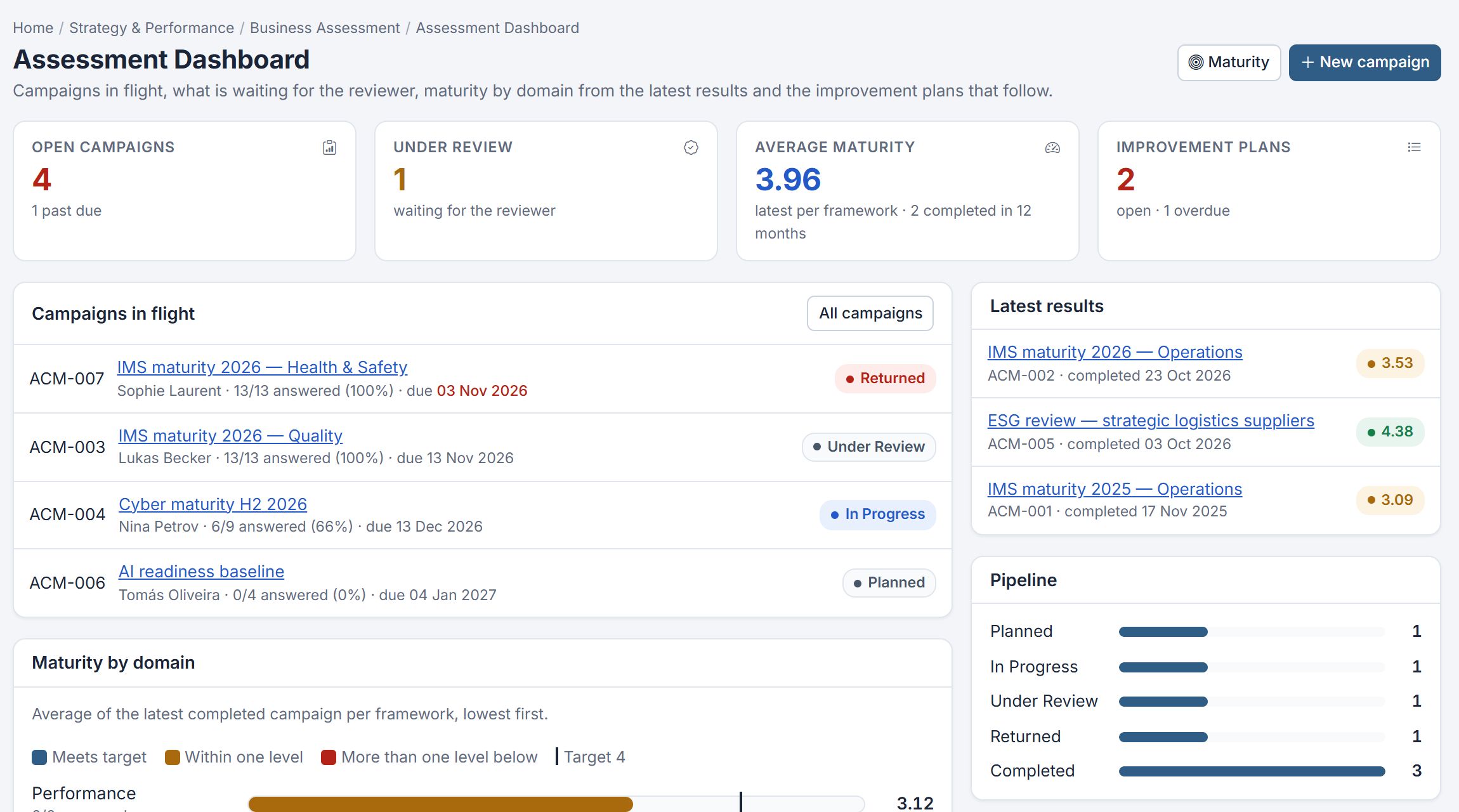
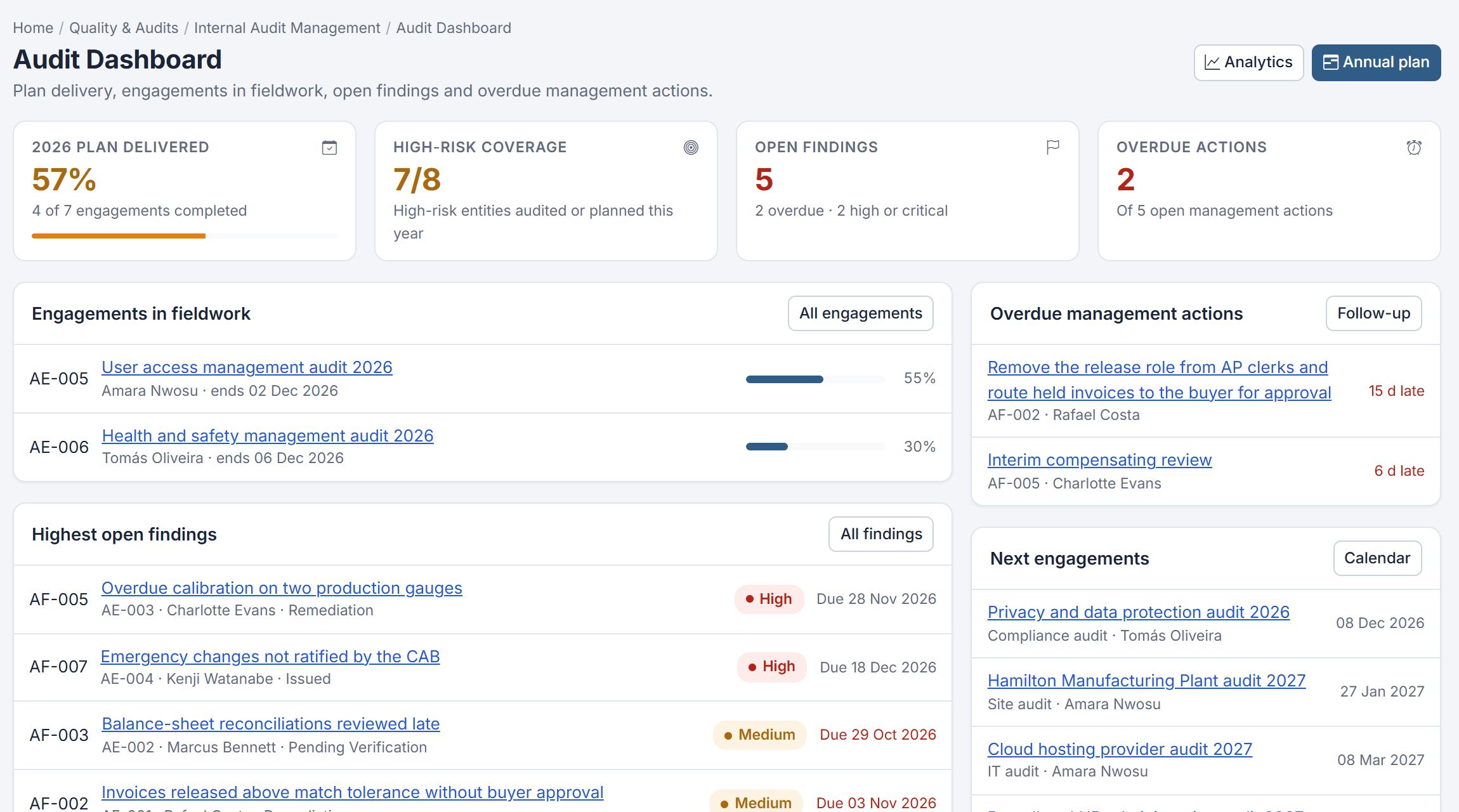
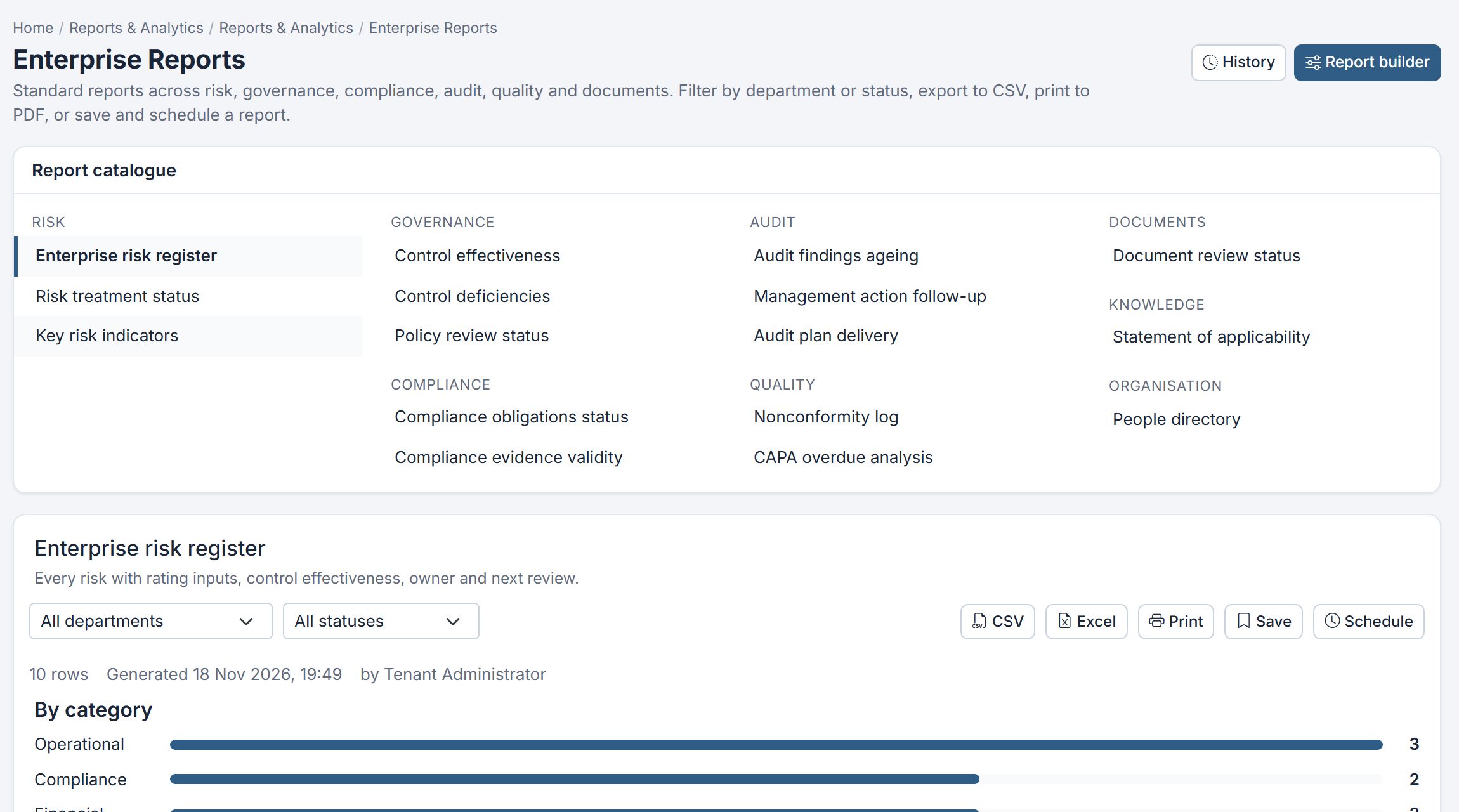
Certora Reports & Analytics lets you explore how records connect across modules with a relationship explorer, alongside standard reports, a report builder, saved and shared reports, scheduled email delivery, board and executive packs and report history.
Because every Certora module shares one data model, links between audits, nonconformities, risks, documents and training are recorded as work happens. See management reporting for a quality system for reporting.