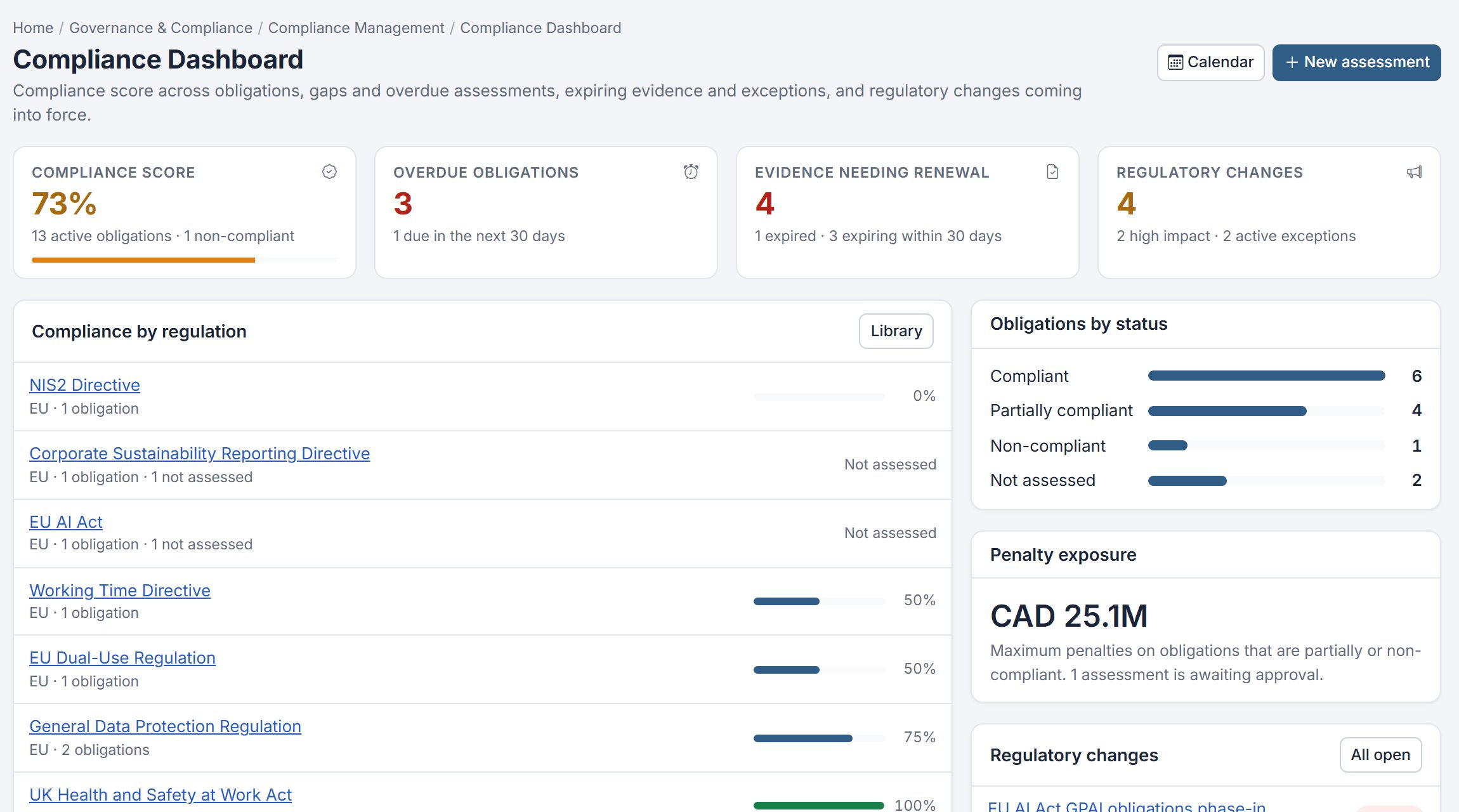
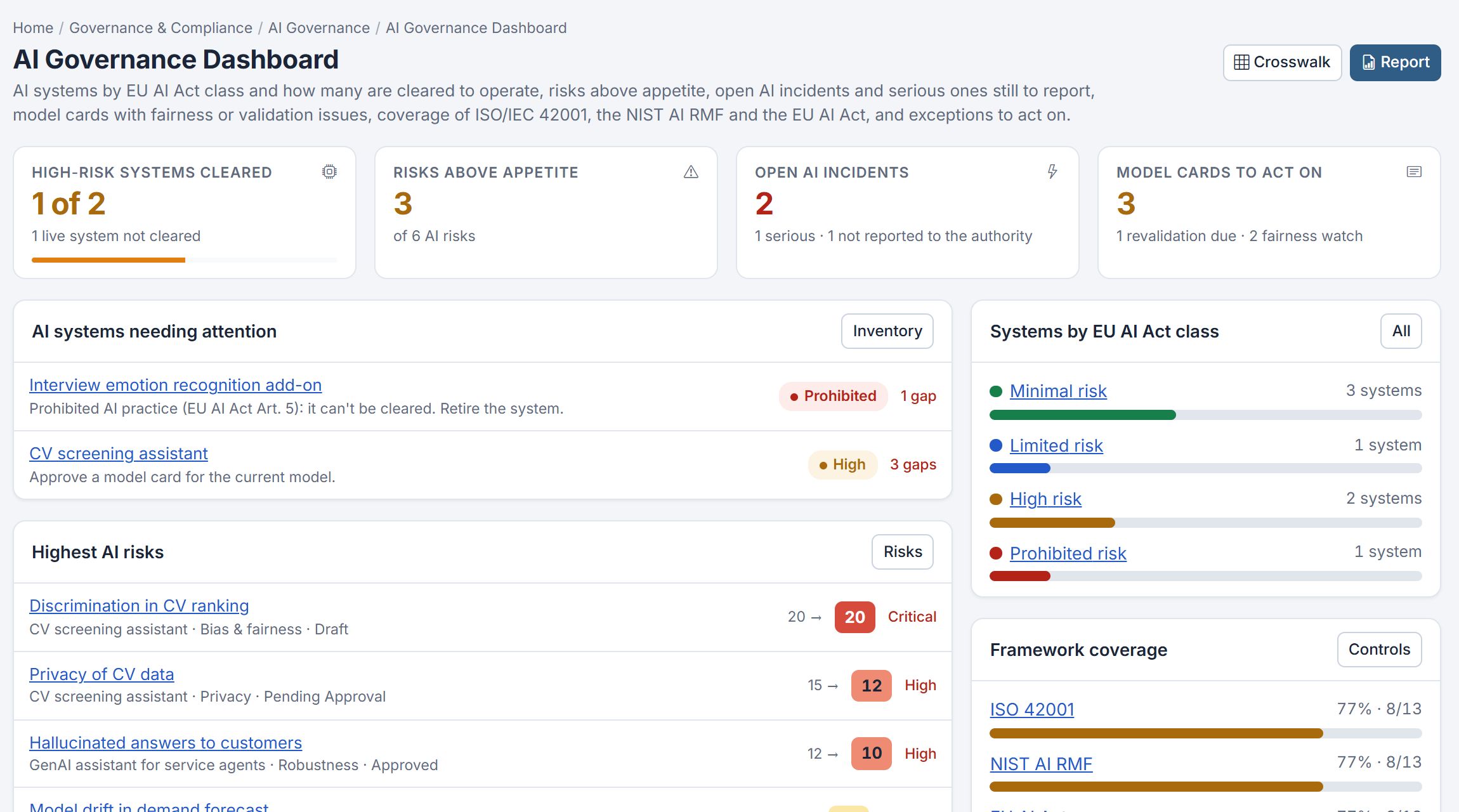
Breaking standards into clause-level requirements you can actually use.
Why breaking ISO standards and regulations into clause-level requirements helps you map controls, plan audits and manage new editions with less rework.
The principle
A standard is hard to manage as a single document. Broken into requirements, it becomes something you can map, test and track.
Organisations often keep the standards they follow as PDF files in a shared folder. That works for reading. It does not help when you need to show which control meets clause 8.4.2, or which requirements changed in a new edition.
As the number of frameworks grows, the problem compounds. A company certified to ISO 9001 and ISO 14001, subject to data protection law and asked by customers to complete security questionnaires, can easily be managing hundreds of individual requirements. Without a structured library, each one is tracked in a different spreadsheet by a different person.
01 · Start with context
Knowledge is a resource the standard expects you to manage.
ISO 9001 clause 7.1.6 asks organisations to determine the knowledge necessary for the operation of processes and to achieve conformity of products and services. This knowledge must be maintained and made available to the extent necessary, and when needs change, the organisation must consider how to acquire or access additional knowledge and required updates.
The standards, regulations and frameworks you follow are a central part of that knowledge. Keeping them in a structured library makes that knowledge usable rather than just stored.
Copyright considerations
ISO standards are copyrighted, and organisations should hold licensed copies. A requirements library can still record clause references, short summaries in your own words and your interpretation of how each applies, which is usually what day-to-day work needs, while the licensed full text remains the reference.
02 · Build the library
One place for every framework you follow.
- Management system standards such as ISO 9001, ISO 14001, ISO 45001 and ISO/IEC 27001.
- Regulations that apply to your sector and jurisdictions.
- Frameworks such as NIST CSF or COSO, where you use them.
- Customer-specific requirements and industry codes.
Each entry records its edition, publication date and status, so it is clear which version is current.
Ownership matters here as much as anywhere. Each framework should have someone responsible for knowing when a new edition is coming, reading guidance as it is published and keeping the library entry accurate.
03 · Break into requirements
The clause is the unit of work.
- Divide each standard into its clauses and sub-clauses.
- Record each requirement as a separate item with its reference and a summary.
- Mark requirements that do not apply, with a justification.
- Note guidance or interpretation that helps people apply it.
Clause-level requirements become the building blocks for mapping, auditing and gap analysis.
How fine to go
Some clauses contain several distinct requirements. ISO 9001 clause 7.5.3, for example, covers availability, protection, distribution, access, storage, preservation, change control, retention and disposition. Breaking it into several requirement items makes each one easier to map and audit. As a rule, a requirement item should be something an auditor could test on its own.
04 · Map once, reuse often
Requirements connect to controls and audits.
With requirements as individual items, you can link each one to the internal controls, procedures and records that satisfy it. Internal audits can then plan coverage by requirement, and gap analyses show which requirements lack evidence.
Where several frameworks ask for similar things, a single control can be mapped to many requirements. The companion article on mapping an integrated management system explores this in detail.
Mapping also reveals gaps. A requirement with no linked control is either covered informally, which is a risk, or not covered at all, which is a finding waiting to happen. Running a coverage report before each certification audit is one of the most efficient forms of preparation.
05 · Manage new editions
Change without starting over.
Standards are revised periodically. When a new edition arrives, a clause-level library lets you compare old and new requirements, identify what changed, and update only the affected mappings, rather than redoing the whole exercise.
Transitions usually come with a deadline set by accreditation bodies, often two or three years after publication. Tracking the transition as a small project, with the changed requirements as its scope, keeps it manageable.
Common pitfalls
- PDFs as the system: standards stored as files, with no way to link individual requirements to controls.
- Undated editions: nobody can say which version of a regulation the organisation is working to.
- Mapping in spreadsheets: mappings maintained by one person in a file nobody else can find.
- Ignoring guidance: official guidance and interpretations not recorded, so the same questions are debated at every audit.
06 · Certora knowledge hub
Standards, clause by clause.
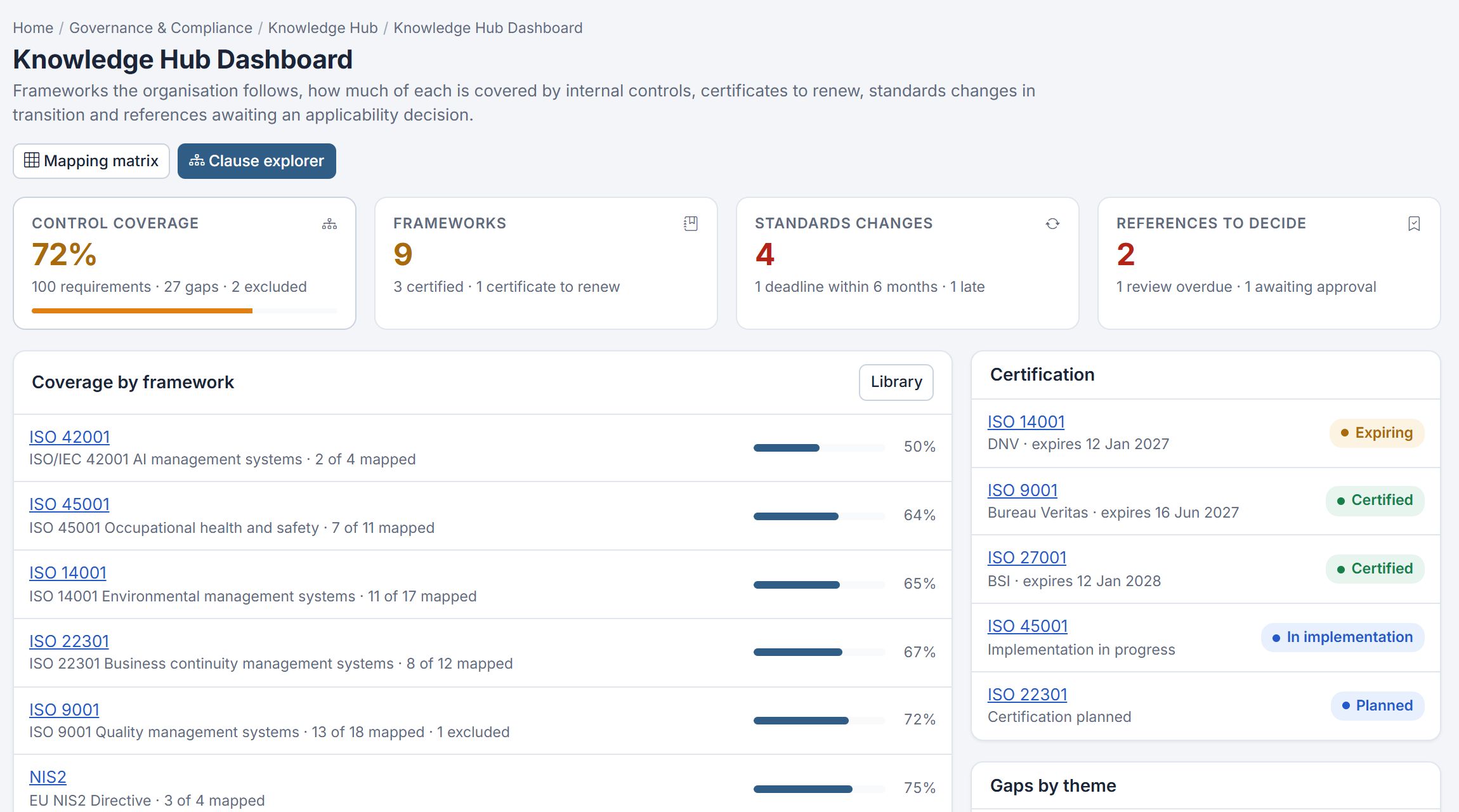
Certora Knowledge Hub keeps the standards, regulations and frameworks you follow in one library and breaks them into clause-level requirements. Requirements are mapped to internal controls once for many frameworks, and new editions and guidance are managed as they are published.
The knowledge hub dashboard shows coverage across frameworks, and the same requirements are available to internal audit, compliance and governance across Certora, so everyone works from one shared understanding of what the organisation must meet.